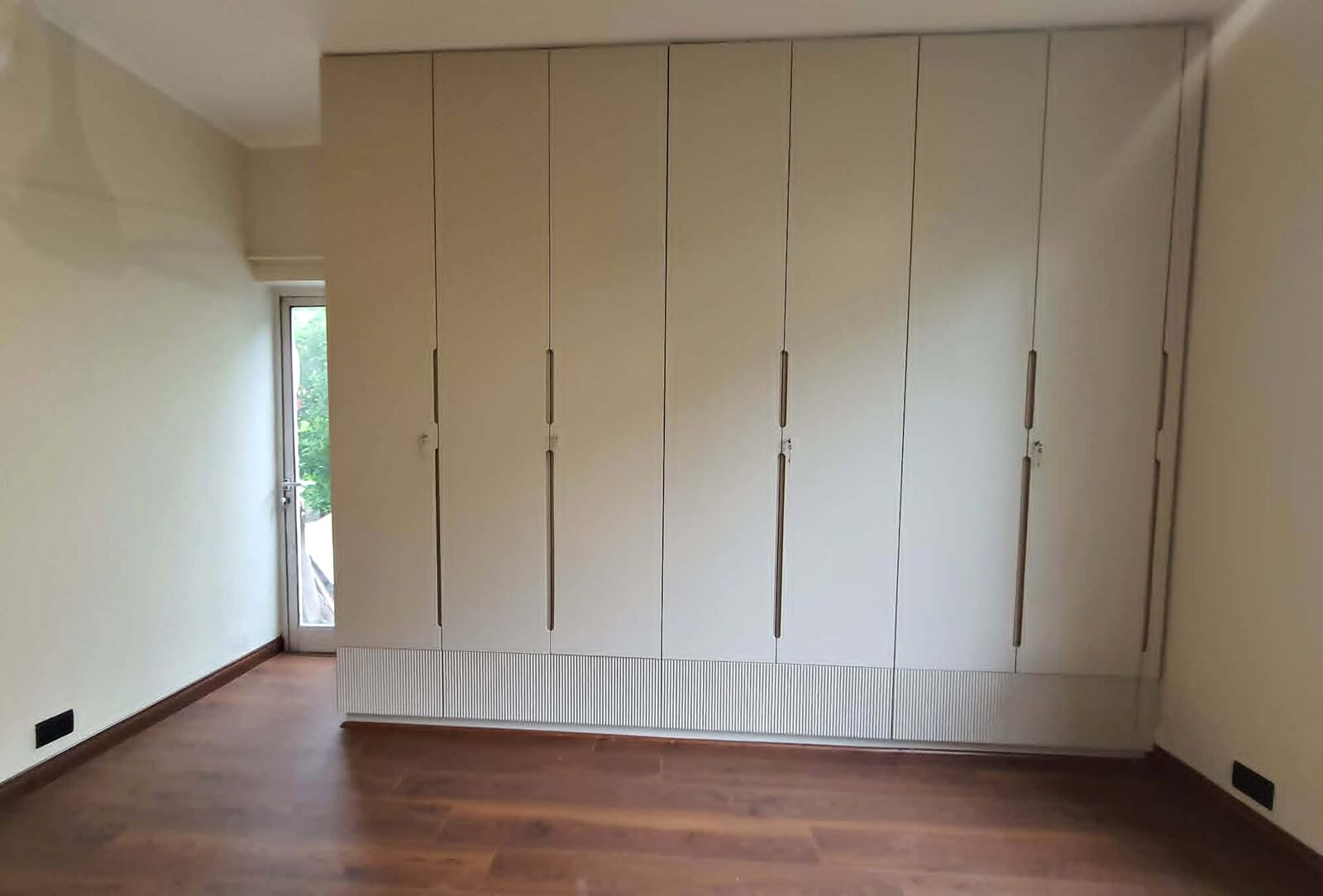
How to Compare Custom Wardrobe Quotes in Gurgaon — What the Price Doesn't Tell You
Two quotations can look similar on paper and describe completely different wardrobes. Make them comparable first. Then compare the numbers.
A friend sent me a quotation for a single wardrobe.
It was 15 pages long.
The designer had arrived on time, brought layouts, and generated the quote during the meeting. The experience felt reassuring. Then my friend tried to answer one question: what does this wardrobe cost, and what exactly is included?
Nobody could say.
Every vertical, every horizontal, every shutter was listed as a separate line. The two numbers that mattered most — the wardrobe area and the rate applied to it — were nowhere. Was installation in? GST? The mirror? Which hardware? Was the total the final installed price?
A single wardrobe should read as one clear line item with a clear specification beneath it.
This quote was detailed. It was not transparent. Those are not the same thing.
Detailed is not the same as transparent
A long quotation looks professional. That tells you nothing about whether you can compare it.
A transparent quotation lets you answer these without a single phone call:
- How big is the wardrobe, and how is it measured?
- What is the carcass made of? What are the shutters made of?
- What is the finish — and what is it applied on?
- Which hardware, by brand and model?
- Which accessories, listed individually?
- Are installation, transportation and GST included?
- What is excluded?
- What will I pay in total, once it is standing in my bedroom?
The job of a quotation is not to look thorough. It is to make the decision understandable.
Three pricing methods, one common basis
One company quotes per square foot. Another prices every component. A third gives a lump sum.
None of these is wrong. But you cannot compare them until they share a basis. A quote can look cheaper simply because some components moved to another page — or disappeared.
Ask every supplier for the same three numbers: wardrobe area, rate, and total installed price with taxes.
"Premium board" is not a specification
Ask which board goes where — carcass, shutters, shelves, drawer boxes — with type, thickness and brand. Ask how edges are sealed. Ask whether both sides are laminated.
And ask to see the board before it is cut. Brand stamps are faked routinely in this trade; a cross-section is not. (The full breakdown is in HDMR vs Plywood — Which Board Should Your Wardrobe Be Built With?)
Two "PU finish" wardrobes can be two different products
The finish describes the surface. It says nothing about what sits underneath, how the shutters are supported, how drawers are built, or what hardware carries the load.
A PU finish also comes in very different grades and coat counts. Ask for the grade, the number of coats, and whether it is sprayed over an HDMR overlay or directly on the board.
A beautiful sample tells you how the wardrobe looks. It never tells you how it is built.
Separate hardware from accessories
A hinge is hardware. A jewellery tray is an accessory. A drawer runner is hardware. A trouser pull-out is an accessory.
Quotes blur the two all the time — and that is where totals quietly drift. Ask for hardware by brand, product and model. Ask for accessories line by line.
And ask one more question about every accessory: which problem in my wardrobe does this solve? If nobody can answer, it is showroom filler.
The exclusions page is the most important page
Mirrors. Internal lighting. Organisers. Special finishes. Dismantling the old wardrobe. Electrical points behind the furniture. Site modifications.
The better question is not "what's your best price?" It is:
"What could I still be charged for after I approve this?"
Square footage measures the wall, not the wardrobe
Two wardrobes on the same wall can be completely different inside.
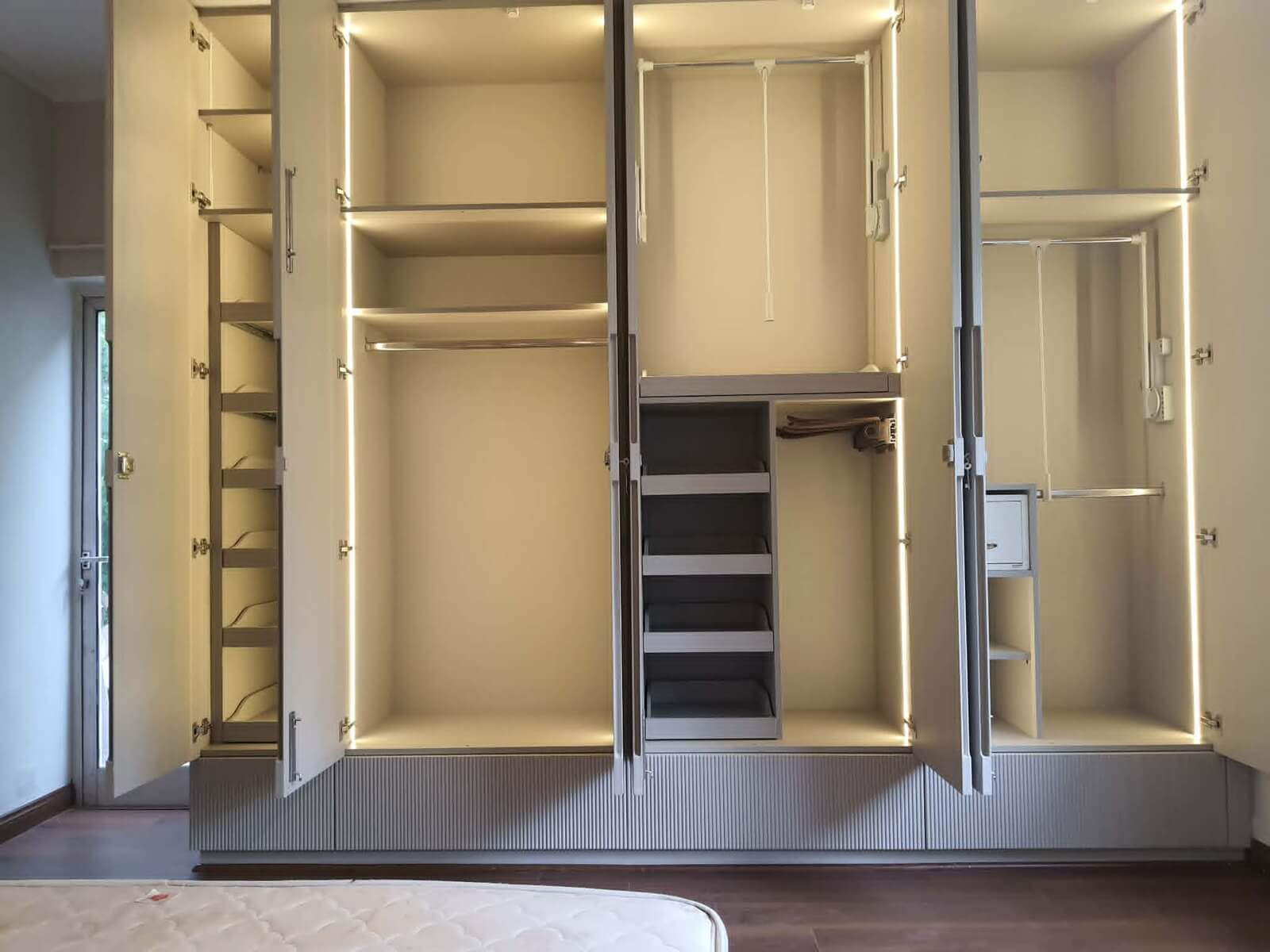
One holds shelves, a hanging rod and two drawers. The other holds three hanging heights, full-extension drawers, a lifestyle cabinet for bags and travel, lighting, and a garment pull-down that turns dead storage into reachable storage.
Same area. Same rate on paper. Not the same furniture.
That difference comes from design — from someone asking what you own, what you reach for at 7 AM, and what keeps getting lost. It is the core of Design30, built on the Rule of 30: most finished wardrobes waste around 30% of their volume because they were measured, never designed.
Make them comparable. Then compare.
The wrong comparison:
- Company A: ₹X lakh
- Company B: ₹Y lakh
The right one:
- Same dimensions
- Same board, finish and grade
- Same hardware models
- Same accessories
- Same internal design brief
- Same installation, taxes and exclusions
Only then does the price mean something. Sometimes the "expensive" quote simply included more. Sometimes the "cheap" one left out the things that make a wardrobe complete.
Read next
Frequently Asked Questions
How do I compare custom wardrobe quotations in Gurgaon?
What should a wardrobe quotation include?
Why is a longer quotation not always better?
Should I compare wardrobes by price per square foot?
What is the most important question to ask before approving a quote?
If this raised more questions than it answered — that's the beginning of a great conversation. Reach out with your questions or list of topics you'd like covered next!
Talk to Himani on WhatsApp