Three Questions to Ask Before You Pay an Advance for Custom Furniture
Most people ask about the price. Almost nobody asks the three things that actually protect them.
You have found someone to build your furniture. The design looks right. The price feels reasonable.
Before you transfer that advance — whether it is ₹50,000 or ₹5 lakhs — ask three questions. Not about the design. Not about the timeline. About the things that determine whether the next three months go smoothly or turn into something you cannot exit.
These are the questions most people in Gurgaon skip. The answers — or the inability to answer them — will tell you more about your furniture designer and manufacturer than any showroom or Google review.
Question 1: What exactly is included in this quotation — and what is not?
Not the total price. What the total price covers.
A quotation that says "₹3,500 per square foot" can mean six different things:
- Does it include the structural board and both sides of laminate — or just one?
- Does it include hardware — hinges, channels, handles — or are those separate?
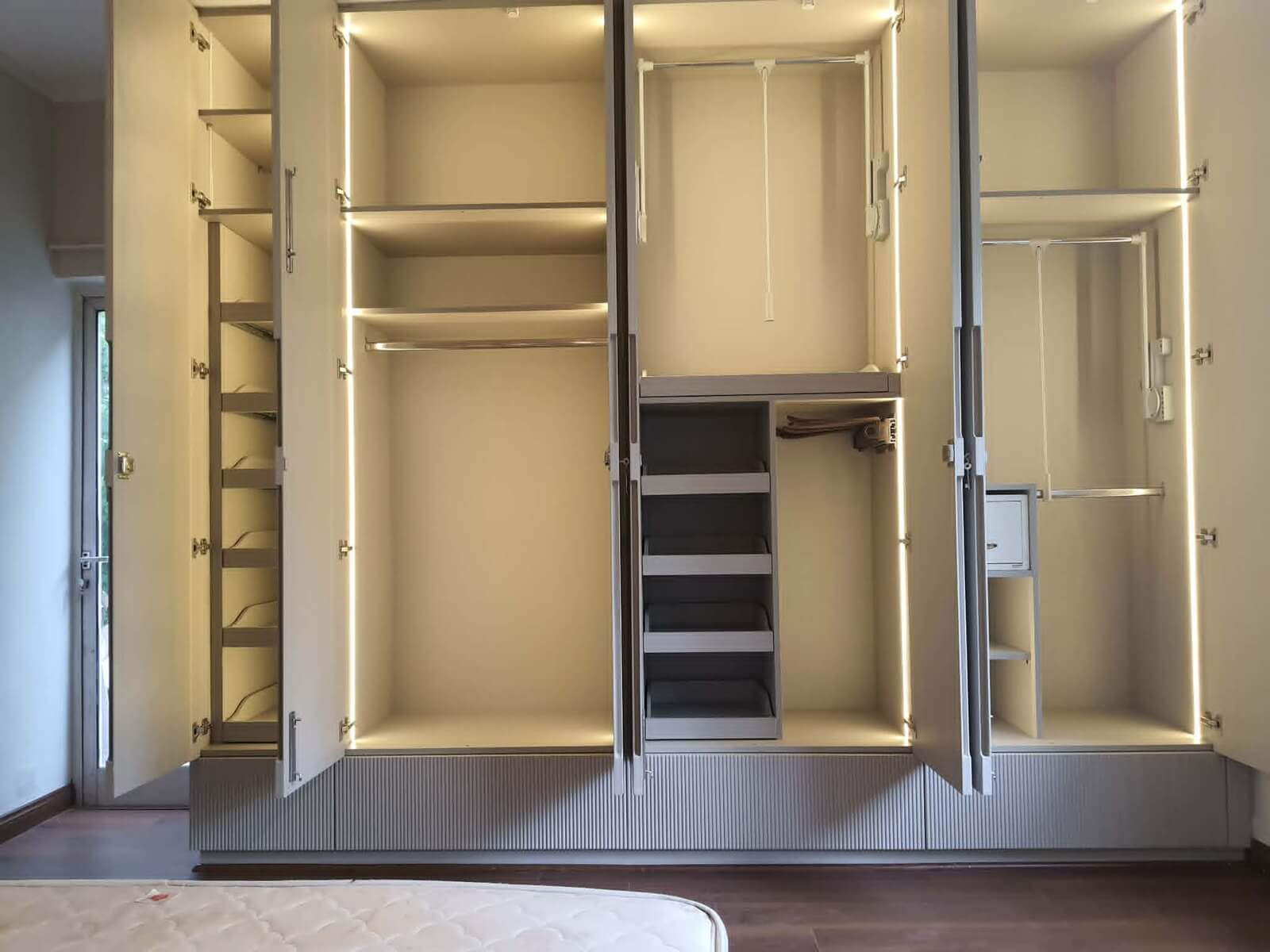
- Does it include internal accessories — drawers, pull-outs, organisers?
- Does it include GST at 18%?
- Does it include transportation from factory to your home?
- Does it include installation on site?
Most quotations in Gurgaon do not include all of these. Some do not include half.
I have seen a 15-page estimate for a single laminated wardrobe that did not specify the thickness of the laminate, the brand of the channels, or whether GST was included. Fifteen pages — and the three things that matter most were missing.
The one thing that should never be separated from the quote: design.
If the quotation does not include the cost of a detailed storage audit, a lifestyle interview, and a custom internal layout — then the quotation is for manufacturing only. Your furniture was not designed. It was measured and filled with a template.
A good design should have a design fee. That is the difference between getting furniture from a workshop and getting it from a designer. Those are two different things, and the price difference between them is where most people lose money without realising it.
Question 2: Can I see where my furniture will be built — before I pay?
This question does three things at once:
- It tells you whether the maker has a factory or is outsourcing
- It tells you whether they are comfortable with transparency
- It tells you whether the quality in the portfolio matches what you will actually receive
A maker who builds in their own factory will invite you. They will show you the machines, the boards, the finishing line, the hardware inventory. They will show you pieces in production. You become a part of the process — not a spectator waiting for delivery.
A maker who outsources will either avoid the question, offer excuses about access, or show you a workshop that is not theirs.
There is nothing wrong with outsourcing — many good furniture companies do it. But if you are paying a premium for factory-direct quality, you have the right to verify that a factory exists.
Question 3: What happens when the site is not perfect?
Custom furniture is built to millimetre precision. But it gets installed in rooms that are rarely millimetre-perfect.
No wall in any Gurgaon apartment is perfectly plumb. Draw a diagonal from top-left to bottom-right and another from top-right to bottom-left — they are never the same length. Floors are not level. Ceilings have height differences from one end to the other.
A wardrobe manufactured perfectly in the factory can arrive at site and discover that the wall is 12 mm wider on one side.
What happens then?
- Does the maker absorb the adjustment cost?
- Is the same team that manufactured it also installing it?
- How long does the on-site adjustment take?
- Does a touch-up look like a touch-up, or does it match the factory finish?
A maker who has installed furniture in a hundred Gurgaon homes will answer this immediately and specifically. They have handled it before. They have a system.
A maker who hesitates, becomes vague, or says "that never happens" — has either not done enough installations or has handled the problems badly.
What these three questions actually reveal
They reveal process.
A furniture designer and manufacturer who can answer all three — clearly, specifically, without hesitation — has built enough wardrobes to know what goes wrong, where costs hide, and what it takes to deliver a finished piece that fits the space it was designed for.
The advance is not the risk. The risk is committing to someone whose process you have never verified.
Read next
Frequently Asked Questions
How much advance should I pay for custom furniture?
What should a custom furniture quotation include?
Can I visit the factory where my furniture is being made?
What if custom furniture does not fit after installation?
How do I choose between two furniture makers in Gurgaon?
Should I pay a separate design fee?
What is the biggest mistake when ordering custom furniture?
How long should custom furniture take?
If this raised more questions than it answered — that's the beginning of a great conversation. Reach out with your questions or list of topics you'd like covered next!
Talk to Himani on WhatsApp