Interior Design for Anant Raj Estate Gurgaon — Why Low-Density Homes Need Different Furniture
"We have so much space. Why is there nowhere to put anything?" It is the most common complaint in large homes — and it is a design problem, not a space problem.
Anant Raj Estate in Sector 63A is not one type of home. The wider estate includes independent floors, villas and plots — which means there is no single "Anant Raj Estate interior."
A floor and a villa may share an address. They do not share a furniture brief.
Low density does not mean low storage
Houses and large floors collect things — luggage, linen, festive décor, sports gear, children's belongings, serving ware for forty, bulk groceries, staff requirements.
The problem is rarely a lack of physical space. It is storage that was never designed around how the household uses the home.
Design30 starts with that inventory. The Rule of 30 says most finished homes waste around 30% of their storage volume — and in a large home, that 30% is a whole room's worth of chaos.
The entrance needs a job
In a large home, the entrance often becomes a beautiful dead zone. Grand door, grand floor — and everyone arriving with bags, keys, shoes, parcels and school things, with nowhere to put any of it.
It does not need a giant cabinet. It needs a plan: a console, concealed shoe storage, a place for keys, one surface for something beautiful. A small space with an outsized effect on how the house feels.
Terraces should feel like rooms
A terrace should not become the place outdoor furniture goes because there is nowhere else.
Decide what it is for — tea, dinners, children, plants, reading — and furnish that. Then connect it inward: the dining room looking out, a family room opening toward an outdoor seat, a bedroom balcony as a private retreat.
In a large home, the kitchen problem is organisation
In a compact apartment, the kitchen lacks space. In a large home, it lacks order. There is room for everything, so everything goes somewhere — and five years later nobody remembers where.
- Daily items in prime reach
- Weekly items a step away
- Seasonal and festive pieces out of the work zone
- Bulk groceries in a proper larder, so everyday storage does not become a warehouse
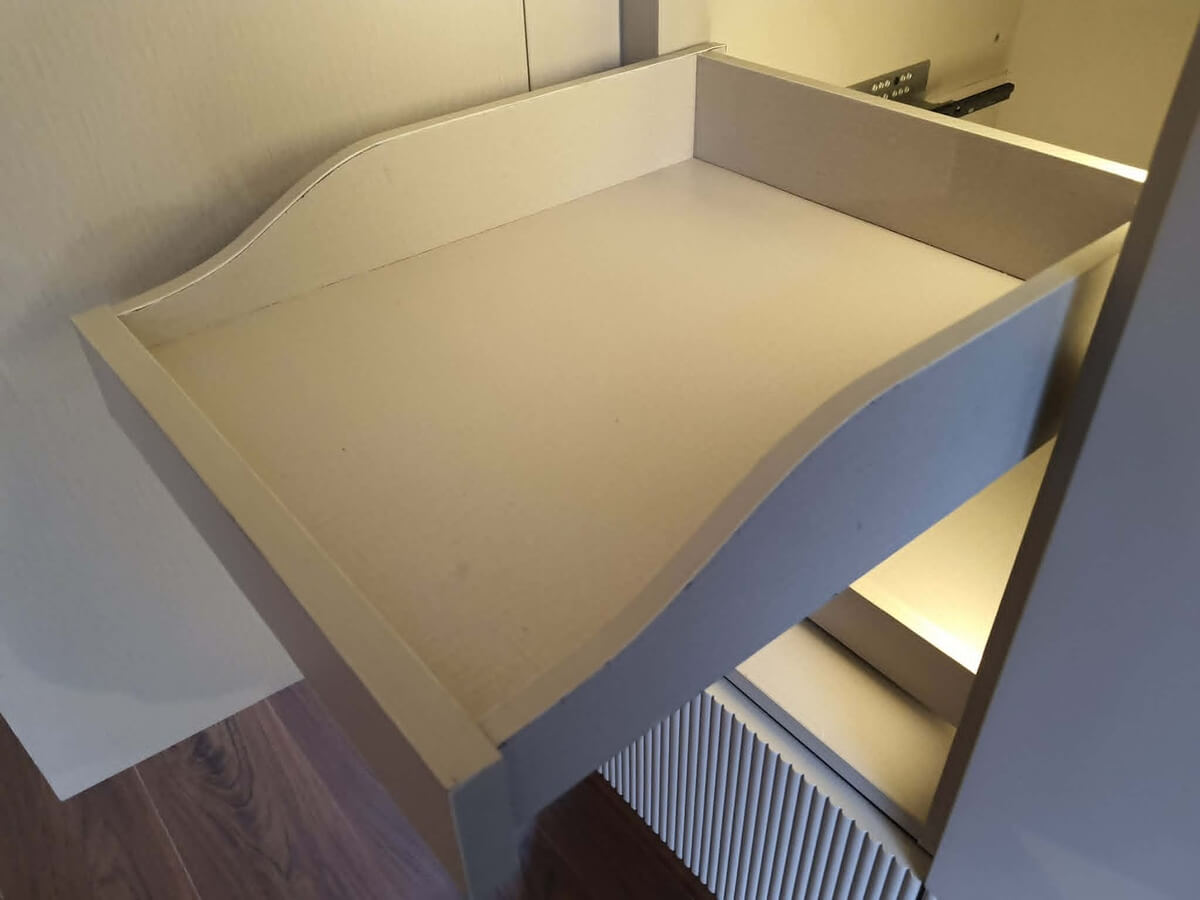
- Pull-outs that make deep storage usable
- Drawers sized to what they hold
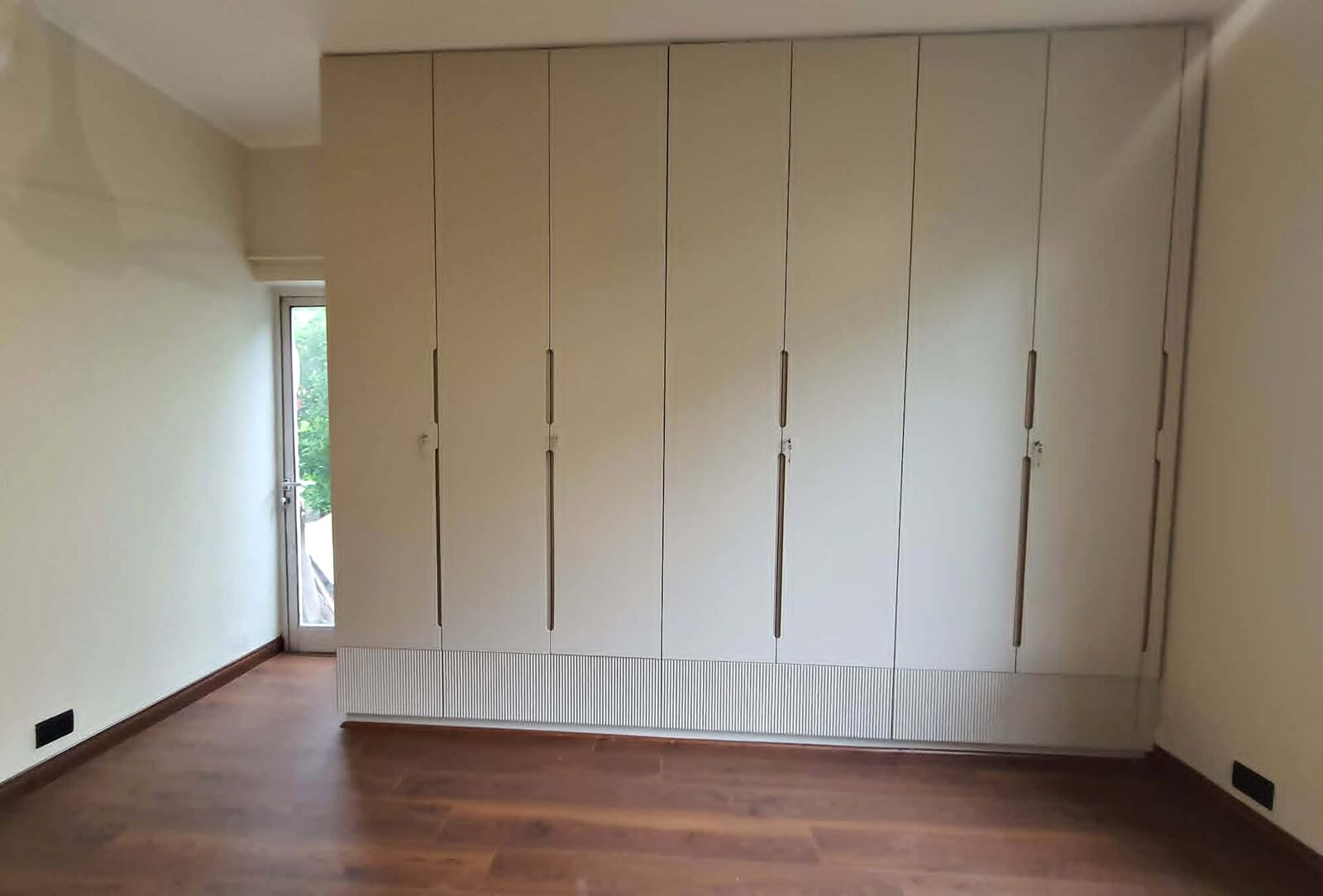
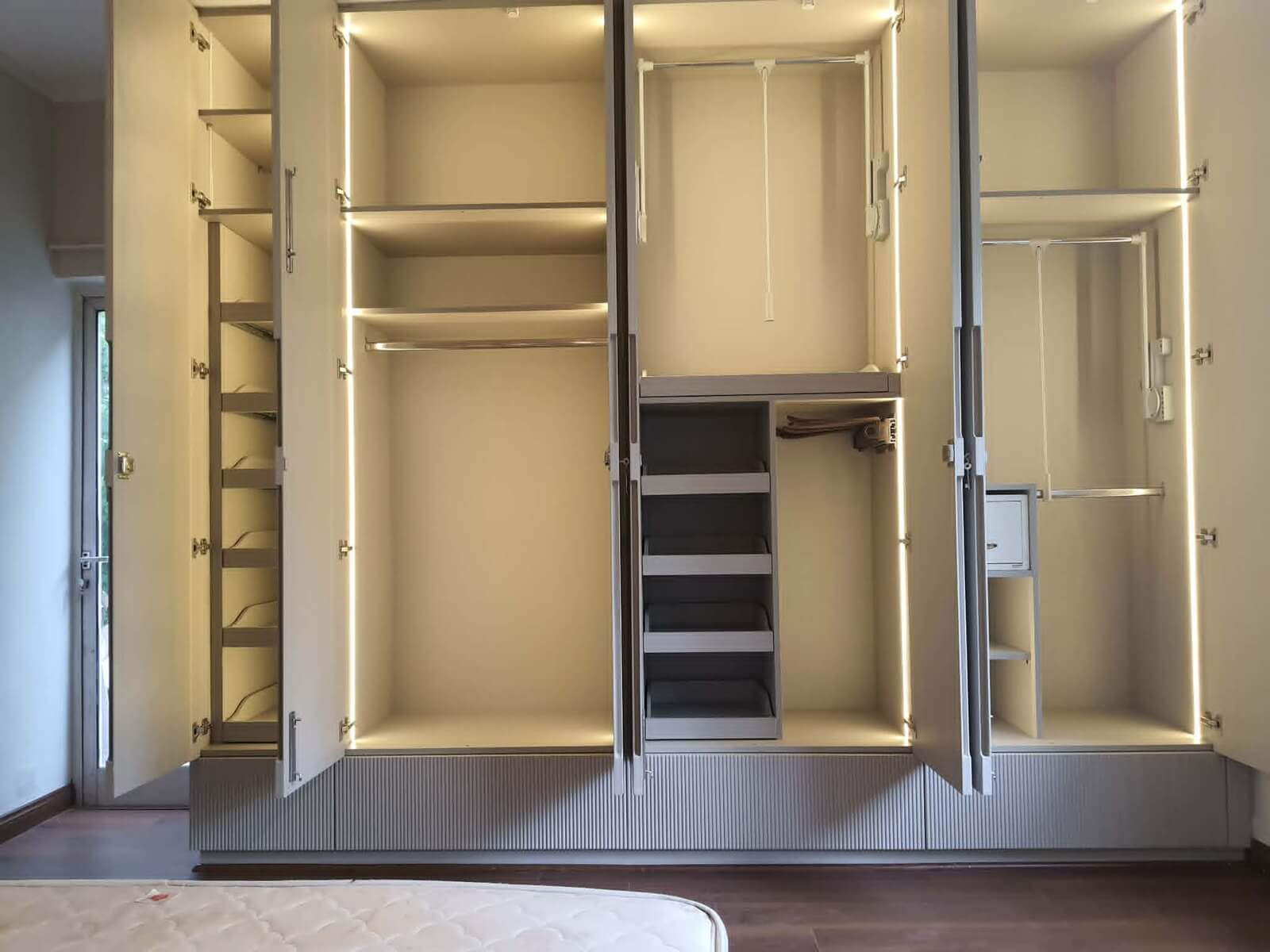
Wardrobes: measure the life, not the wall
The temptation in a big bedroom is to measure the wall and "use the whole thing." A wardrobe does not succeed because it contains more board. It succeeds when you find what you need without fighting it.
Someone with forty pairs of shoes has a different problem from someone with six. Someone who travels every month needs luggage storage within reach. Two wardrobes with identical outsides can — and should — have completely different insides.
Don't turn the house into a showroom
Space invites furniture. Then more furniture. Then consoles, occasional chairs, decorative cabinets — until every room is technically furnished and nobody can breathe.
A luxury home needs hierarchy. Some pieces lead. Some stay quiet. Some solve a problem. Some are simply beautiful. And some space stays empty on purpose.
Read next
Frequently Asked Questions
Where is Anant Raj Estate?
Why do large homes still run out of storage?
What should be designed first in a large home?
How should a terrace be furnished?
Does every room in a large home need to be fully furnished?
If this raised more questions than it answered — that's the beginning of a great conversation. Reach out with your questions or list of topics you'd like covered next!
Talk to Himani on WhatsApp