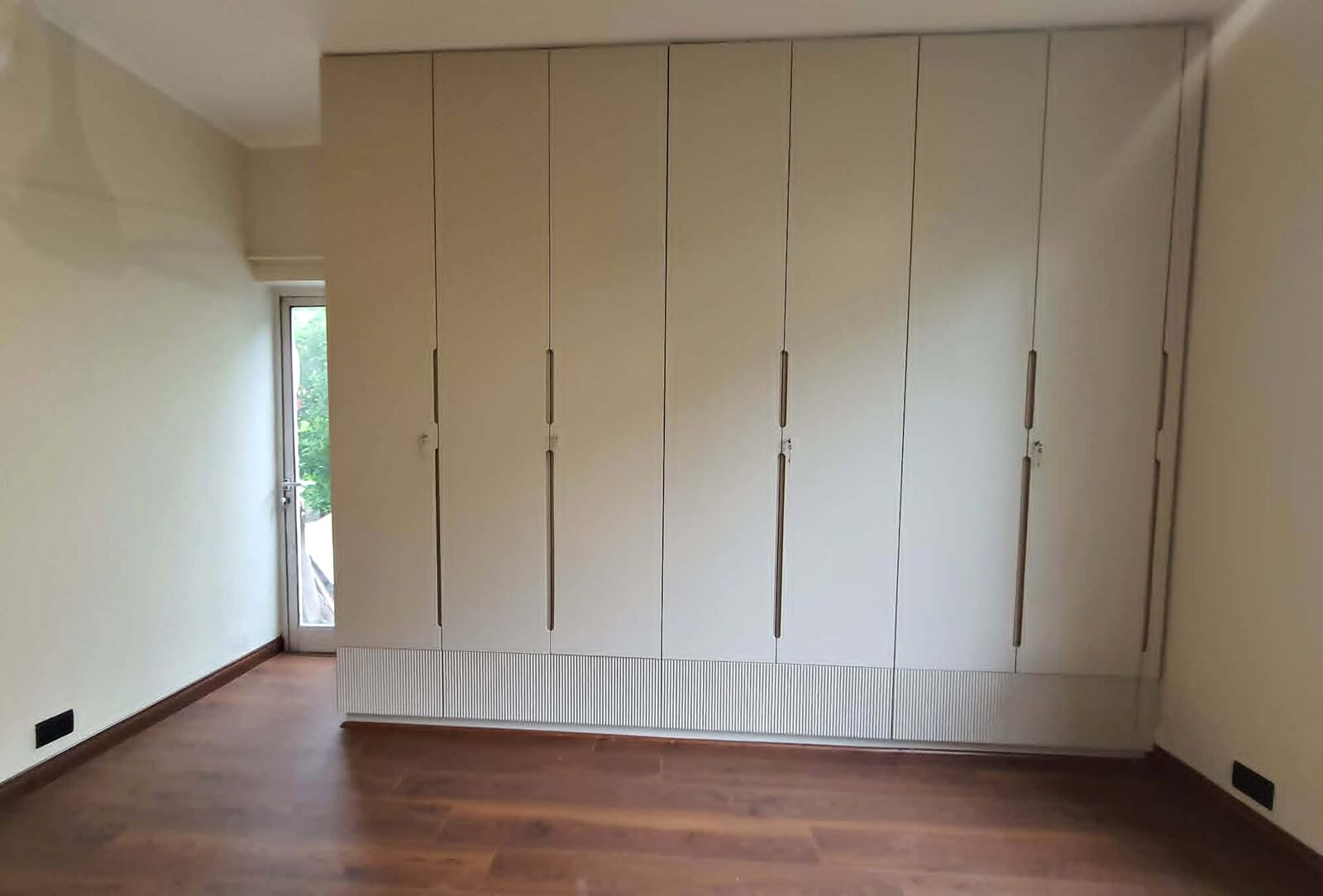
More Storage Doesn't Mean Better Storage
A wardrobe can have a hundred compartments and still fail you every morning. The problem was never the size. It was the thought behind the design.
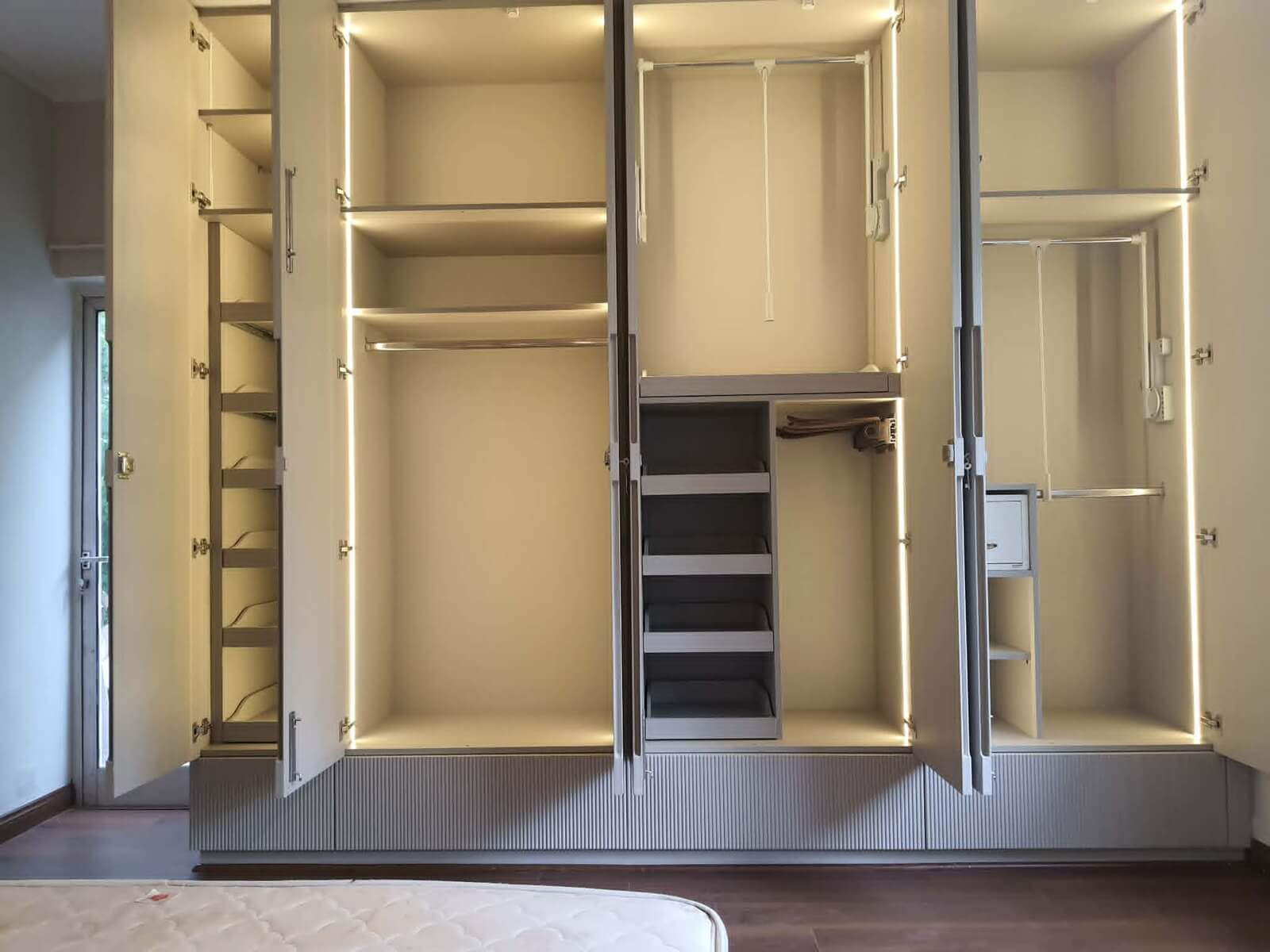
A 12-foot wardrobe is not automatically better than an 8-foot wardrobe. A hundred compartments are not better than thirty. A cupboard full of dead corners is not successful storage.
The question is never how much storage you have. It is how much of it you can actually reach, see, and use — every day, without effort.
When more storage makes things worse
Adding storage without design is like adding rooms to a house without a floor plan. Each new compartment solves one problem and creates another: things get buried deeper, shelves stay half-empty because the height does not match what sits on them, corners become permanently dead.
The instinct is always "I need more space." The reality, in most Gurgaon luxury apartments, is that a significant portion of existing storage volume is already going unused — not because the wardrobe is small, but because it was designed around standard dimensions instead of the person who lives there.
The difference between storage volume and usable storage
Storage volume is the total cubic space inside your wardrobe — every shelf, every drawer, every hanging rod, every corner, multiplied by height.
Usable storage is the portion you can actually access without effort — at arm height, visible at a glance, reachable without a stool, organized so the right thing is easy to find.
In a template wardrobe, the volume can be generous and the usable portion shockingly small. Shelves too high. Drawers too deep without pull-outs. Corners where nothing reaches. Lofts that become permanent dead storage.
Design30 measures the gap between the two. That gap — often around 30% — is where the real opportunity lives. Not in adding more cabinetry. In making the existing space intelligent. (To understand how Design30 works, read the Storage section on the SpaceTalk homepage.)
A quick storage audit you can do right now
Before calling any designer, walk through your home with these questions:
- What do you reach for daily? Where does it live?
- What do you reach for weekly? Is it easy to get to?
- What is seasonal — pulled out twice a year? Where is it stored?
- What do you own but rarely use? Is it occupying prime space?
- What is currently on chairs, floors, or bags? Why?
- What do you forget you own — because it is buried too deep to see?
- What do you need a stool to reach?
The answers tell you exactly where your wardrobe is failing — and whether the solution is more storage or smarter storage.
What actually makes storage better
- Shelf heights determined by what sits on them. Not equal shelves — calibrated by category, folding method, quantity, and frequency of use. A shelf for folded sarees should not be the same height as one for jeans. A shelf for heavy blankets should not be at eye level.
- Zones that match frequency of use. Everyday at arm height. Formal higher. Seasonal in dedicated compartments. Bulk storage out of the prime zone. Nothing blocking what you reach for first.
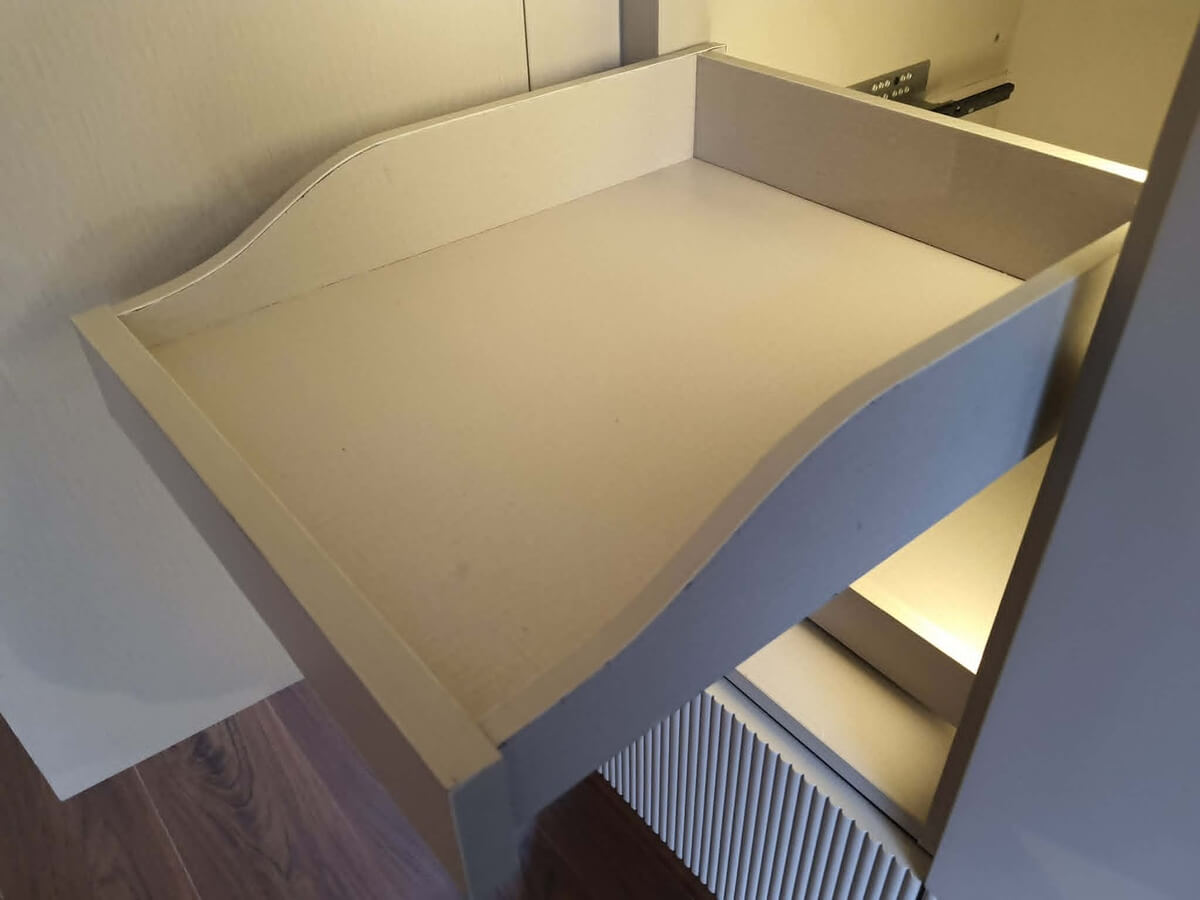
- Pull-outs that eliminate dead depth. A 24-inch deep fixed shelf is useless past 16 inches. A pull-out brings the back forward. Every centimetre earns its place.
- Accessories that serve real habits. A garment pull-down you use daily is worth it. A shoe carousel you never touch is stolen space.
- Negative space. Not every wall needs cabinetry. Not every niche needs a shelf. Sometimes the best storage decision is to leave a wall empty — because a room that breathes is more luxurious than a room that stores.
The expert insight nobody talks about: storage density vs storage accessibility
This is the sophisticated version of the argument.
You can deliberately have less storage in order to make the important storage dramatically easier to use.
Fewer shelves — but each one at the right height, holding exactly what it should. Fewer drawers — but each one visible, accessible, soft-close. Fewer compartments — but each one designed for a specific category.
The result: you find what you need in seconds. Everything is visible. Nothing is buried. The wardrobe feels spacious even if it is physically smaller.
That is the difference between filling a wall and designing storage.
The real luxury is not more — it is less, but designed
Imagine getting ready for a dinner. You need shoes, a bag, accessories, jewellery, a choice between two outfits. Everything should be visible in one glance — accessible without digging, without unstacking, without moving three things to reach the fourth.
A wardrobe with 40 compartments, each one sized for what it holds, each one at the right height, each one accessible — that outperforms a wardrobe with 80 compartments where half are dead space.
This is what separating volume from usability looks like. And this is why measuring a wall and filling it with standard shelves is measuring, not designing.
Read next
Frequently Asked Questions
How much wardrobe storage do I actually need?
What is dead storage?
What is Design30?
Is a bigger wardrobe always better?
How do I maximise storage without adding more furniture?
What is the difference between storage volume and usable storage?
If this made you look at your wardrobe differently — that's the beginning of a great conversation. Reach out with your questions or list of topics you'd like covered next!
Talk to Himani on WhatsApp