Smart Wardrobes, Smart Buyers — How to Maximise Every Rupee You Spend on Custom Storage
Five questions. Five minutes. Could save you lakhs.
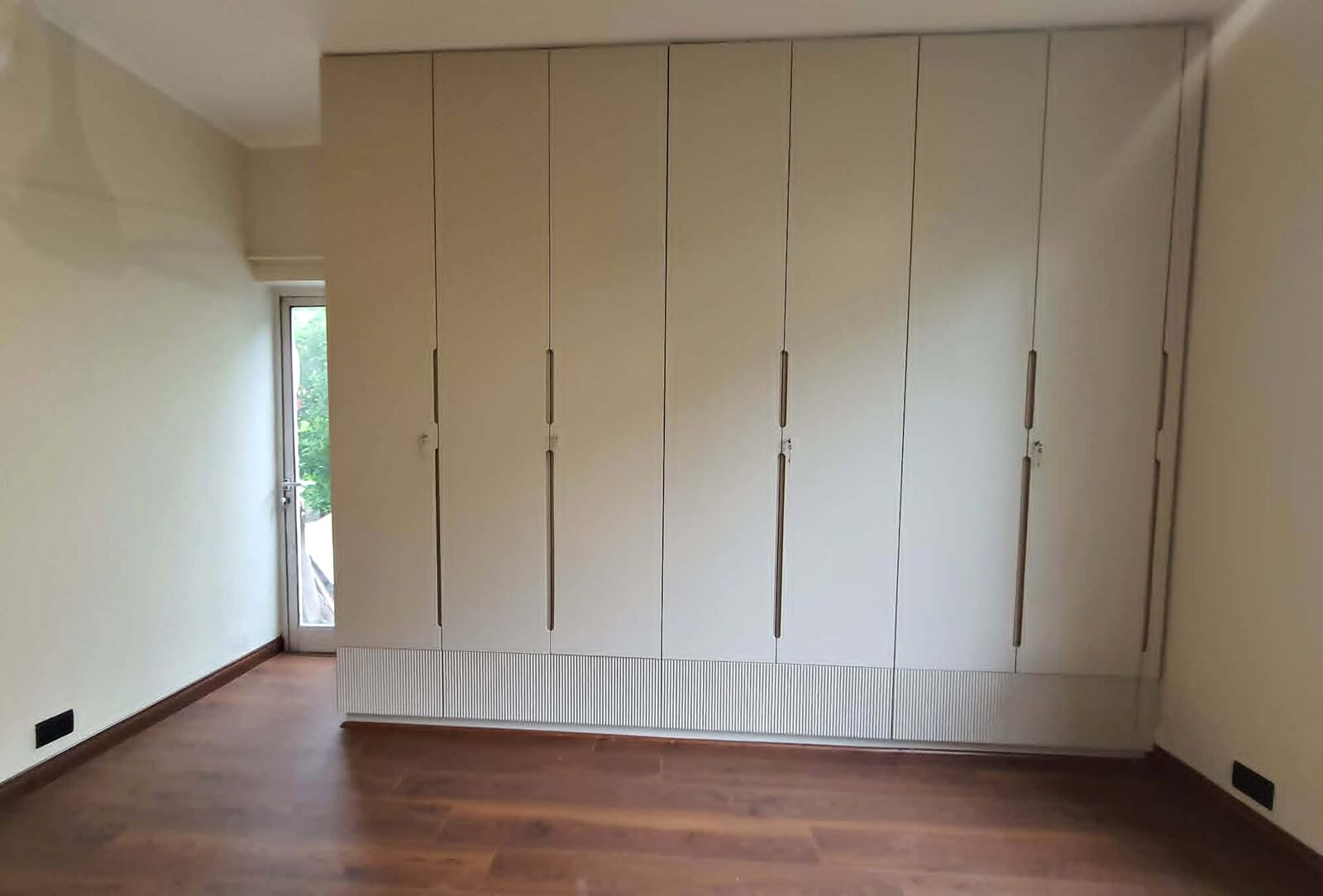
An insider's guide to custom closets in Gurgaon — five shortcuts that cost you the most, from someone who has built closets, kitchens and storage solutions for over two decades.
Most custom wardrobes in India don't even look like what was ordered — let alone last like they should. The finish is off. The shutters don't sit flush. The drawers stick within a year. And what's behind the panels is a story nobody tells you until it's too late.
After twenty-five years of designing and manufacturing storage for homes in Gurgaon, I've seen every shortcut in the book. Here are the five that cost you the most.
1. The Measurement That Quietly Doubles Your Bill
This is the most basic one, and it tells you everything about who you're dealing with.
A wardrobe is measured by its front face — width multiplied by height. A ten-foot-wide, ten-foot-tall closet is a hundred square feet. The depth — usually around two feet — is not multiplied in.
Some makers calculate width × height × depth. That hundred-square-foot closet suddenly becomes two hundred square feet on paper. The per-square-foot rate looks lower than the market, so you think you're getting a deal. You're not. You're paying more for the exact same closet.
2. What's Underneath the Finish Is What You're Really Paying For
The board everyone's talking about right now is HDMR — High Density Moisture Resistant. Every kitchen brand, every wardrobe company leads with it. Sounds technical. Sounds premium.
Here's what they don't tell you: HDMR is a decorative board, not a structural one. It's meant to be a four-millimetre layer pasted on top of the structural board — block board or commercial plywood — to give you that smooth, clean finish for PU or vinyl. That's all it does.
The structural board is what actually holds the weight. The shelves. The hanging rods. The drawers. That's where the screws grip. That's what keeps the carcass square for decades.
When someone builds your entire wardrobe carcass out of HDMR alone — no structural board underneath — they're saving roughly ₹500 per square foot. On a ten-by-ten closet, that's fifty thousand rupees they save. You'll never see the difference on day one. You'll feel it in year three, when the shelves start sagging, the screws lose grip and can never hold in the same hole again, the shutters go out of alignment, and nothing closes the way it should.
"What's the structural board under the HDMR?" — this one question tells you more about a maker's integrity than anything else in the quote.
3. The Side You'll Never See — Until It Warps
Every panel in a wardrobe needs to be laminated on both sides — the side you see and the side you don't. The back panel. The inside of the shutter. The underside of a shelf.
When only one side is laminated, the board absorbs moisture unevenly. Over months, it bows. You've seen it — those full-height shutters that curve outward like a drawn bow. That slight bend that means the door never sits flush again.
Laminating both sides costs more. Skipping it saves the maker money on every single panel in your closet. It's one of the most common shortcuts, and one of the hardest to catch until the damage is done.
4. Know Your Channels Before You Open a Drawer
Drawer channels come in two types, and the price difference between them is one of the biggest cost variables in any wardrobe.
- Side-mounted channels from Hettich or Häfele are smooth, durable and well-priced. They take up a small amount of space horizontally inside the drawer.
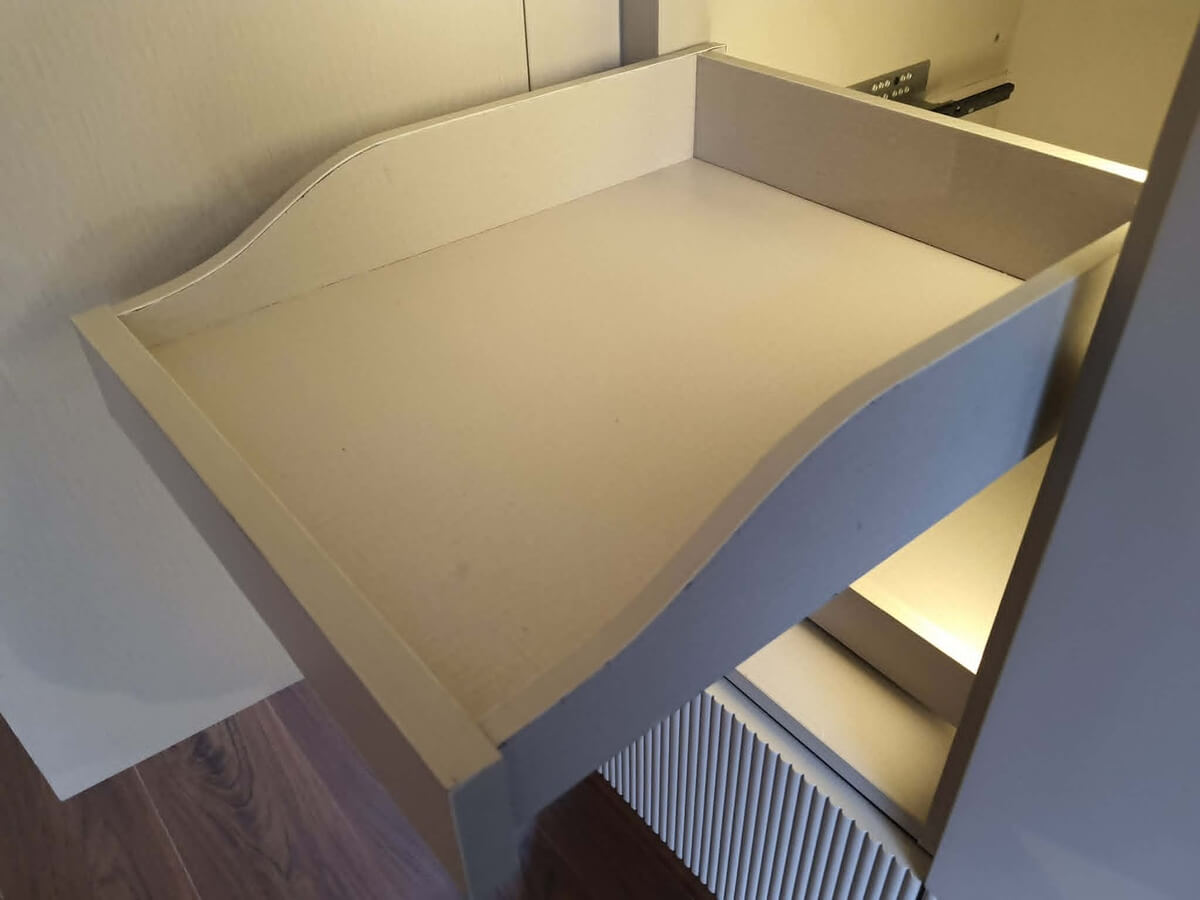
- Bottom-mounted channels — the Quadro series, from the same German brands — are roughly three times more expensive. These give you soft-close and push-to-open. No handles needed. You press the drawer front and it glides out silently. Push it back and it closes on its own. They sit under the drawer and take a little height.
Both are good. Both are legitimate. The problem is when you're quoted for bottom-mounted Quadro and given side-mounted instead. It's an easy swap because you can't tell from the outside. The drawer opens either way.
Know what you've signed off on. Check the brand name stamped on the channel rail after installation. And if soft-close and push-to-open aren't important to you, save the money honestly — go with side-mounted from the start and put the difference toward something that matters more.
5. Smart Investments vs Catalogue Fillers
This applies to both wardrobes and modular kitchens.
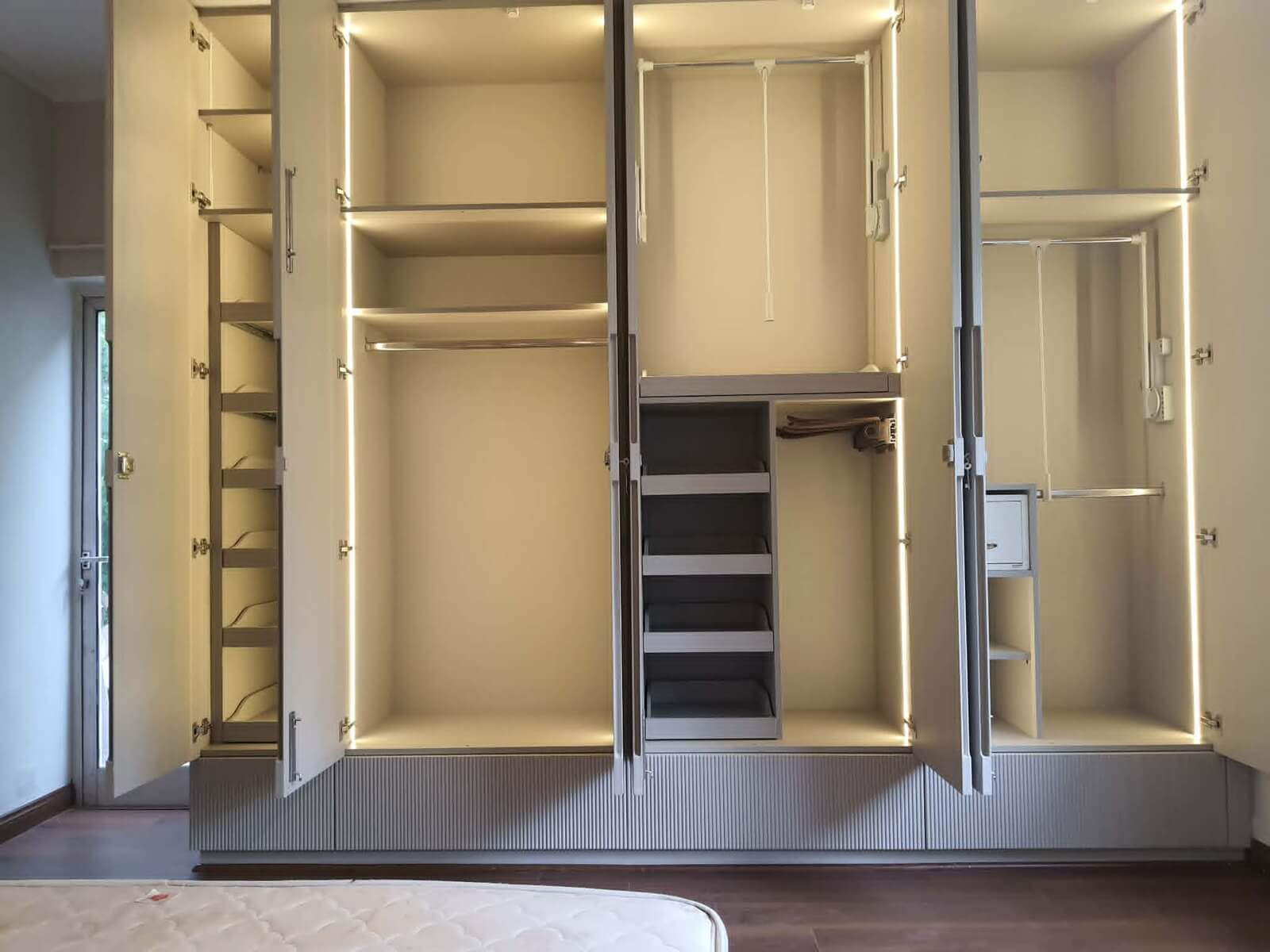
The single best accessory investment is a garment pull-down. It eliminates the loft entirely — that dead, hard-to-reach top section of every Indian almirah — and gives you full-height daily access to everything you hang. Fifteen to eighteen kilos of capacity. German-engineered. Built to last. Don't buy the Chinese alternatives — the tolerance isn't there.
Beyond pull-downs, ninety percent of the fancy organizers, revolving corner units and accessories on the market — for both wardrobes and modular kitchens — are there to fill the manufacturer's invoice, not your storage.
If your drawers are well-designed — fully pulled out, everything visible at a glance — and your hanging is properly segregated between everyday, occasion and seasonal, you don't need most of what's being sold to you.
Good storage design replaces accessories. When the architecture of the closet is right, you don't need gadgets to find your clothes.
Frequently Asked Questions
How should a custom wardrobe be measured in India?
Is HDMR good enough for wardrobe construction?
Why do wardrobe shutters warp over time?
What is the difference between side-mounted and bottom-mounted drawer channels?
Are wardrobe accessories worth the investment?
If this raised more questions than it answered — that's the beginning of a great conversation. Reach out with your questions or list of topics you'd like covered next!
Talk to Himani on WhatsApp