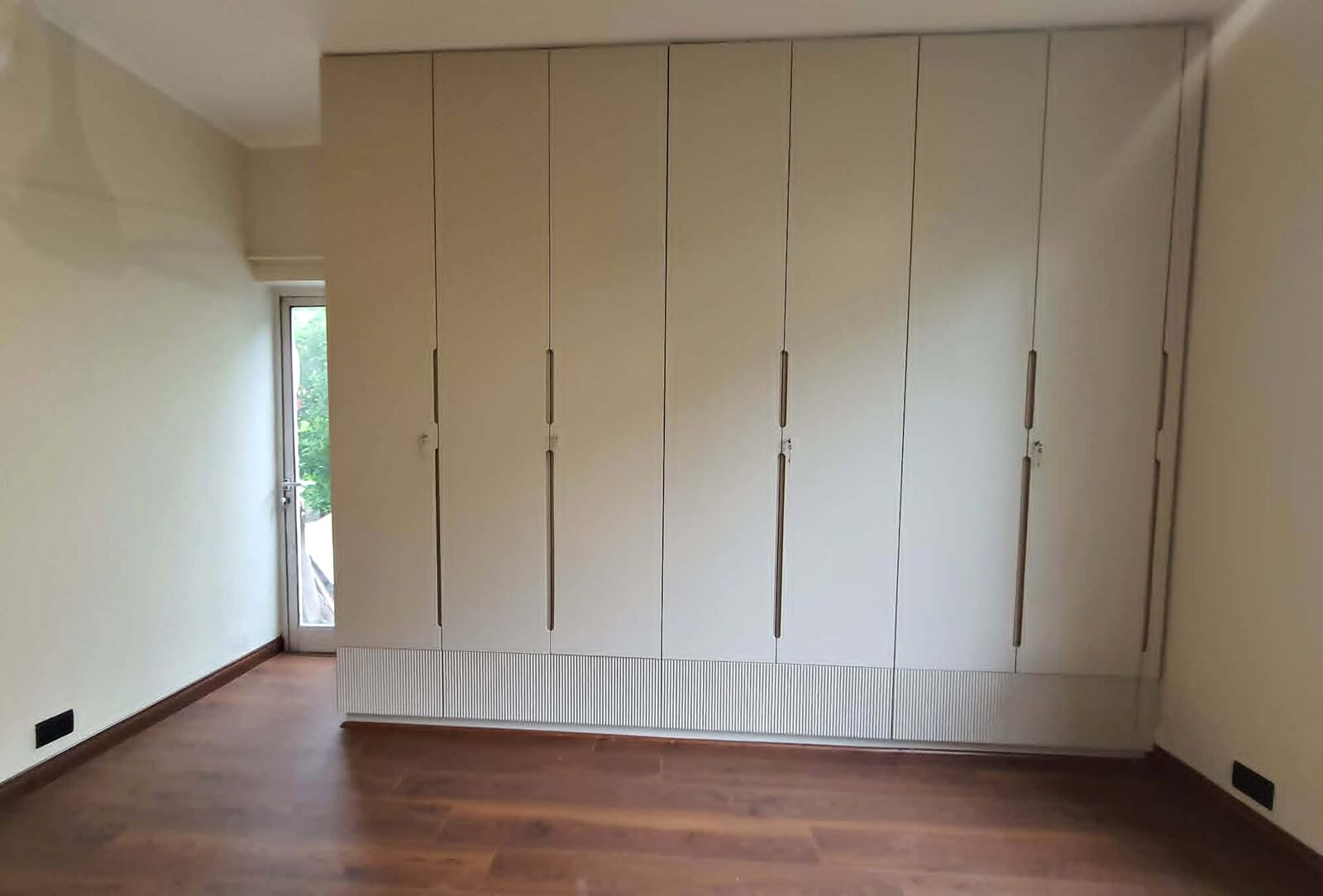
HDMR vs Plywood — Which Board Should Your Wardrobe Be Built With?
One is the finish on top. The other is the structure underneath. Most people are sold them the wrong way around.
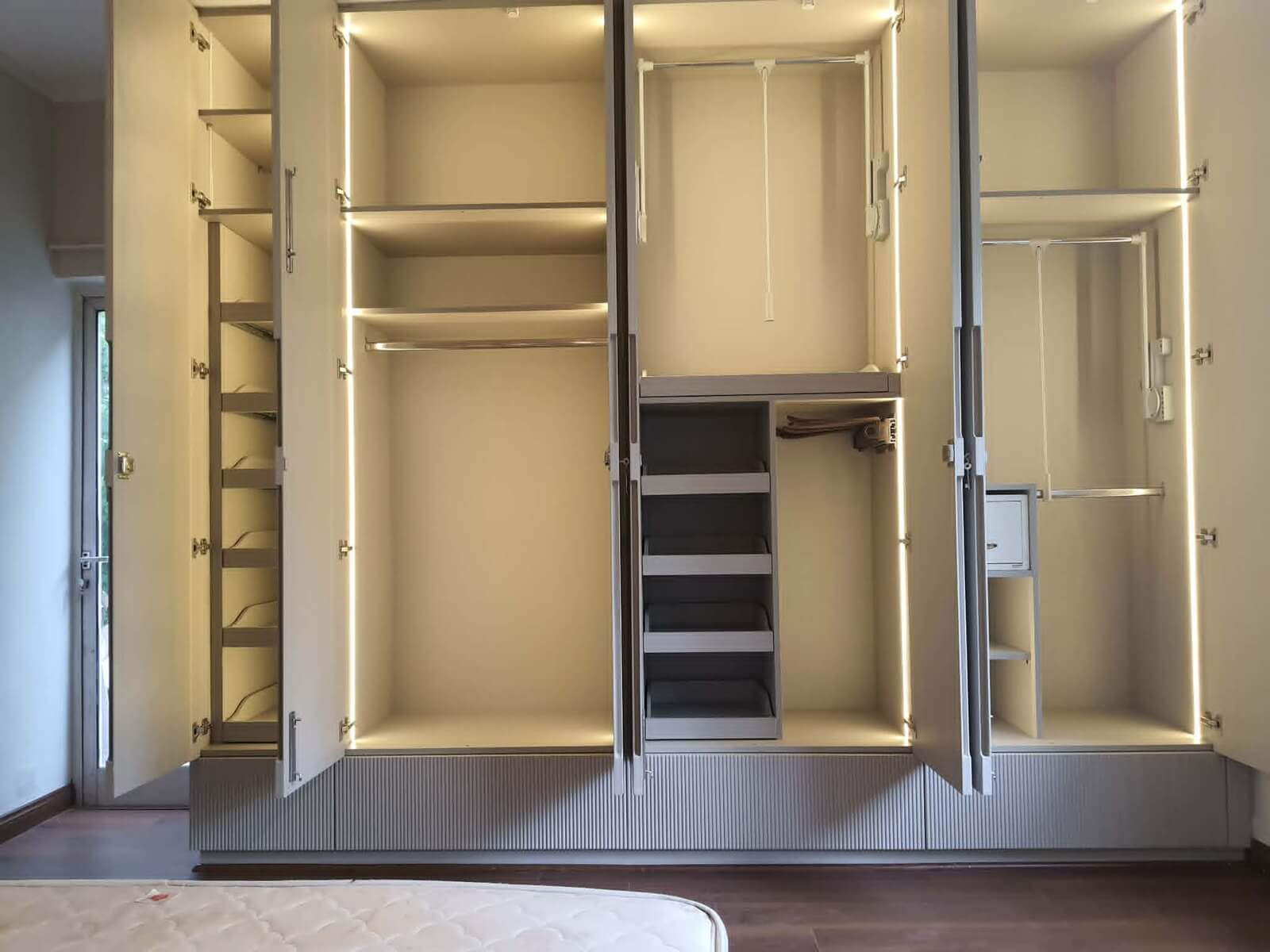
HDMR is not a structural board. It is not built for strength, and it is not built for longevity.
It is a finishing layer — smooth, dense, designed to take a PU coat or veneer overlay beautifully. Think of it as the plaster of Paris on a wall. The wall itself — the brick — is the blockboard underneath.
Get the wrong brick, and no amount of plaster will save it. Get the right brick, and the plaster will look stunning for years.
That distinction — finish on top versus structure underneath — is the single most important thing to understand before you approve any wardrobe quotation in Gurgaon.
What is HDMR actually made of?
HDMR stands for High Density Moisture Resistant. Wood fibres compressed under high pressure with a resin binder.
The surface is more uniform than blockboard, which is why it is the preferred base for PU finishing. When you see a flawless lacquered wardrobe, the layer sitting on the structural board is almost always HDMR.
Here is what most people are not told.
HDMR at 4 mm has no structural strength. It cannot hold a shelf under load. It cannot take a screw and keep holding it after two monsoons.
Some makers use thicker HDMR — 18 mm — as the main structural board. The construction looks similar, but the core is fundamentally different. Blockboard has solid timber strips. HDMR has compressed fibres. Under sustained weight and humidity, compressed fibres lose their grip.
What should the structural board be?
19 mm blockboard. Solid timber strips running through the core, cross-banded with veneer on both faces.
That construction gives it the strength to:
- Hold shelves without sagging — even under folded sarees and heavy blankets
- Grip screws at hinge points — even where shutters hang and get pulled open daily
- Stay stable through Gurgaon's dry winters and humid monsoons
A note on plywood: below 19 mm, plywood is thinner and not strong enough for wardrobe structure. At 19 mm, plywood and blockboard are essentially the same thing — same construction, same strength. So when people ask "plywood or blockboard?" — at the thickness that matters, they are the same product.
The Indian market problem nobody talks about
The timber market in India is deeply unstructured. Brands are faked. ISI marks are printed on boards that never saw a testing lab.
The only reliable way to judge a board is to cut it open and look at the core:
- Good blockboard: tightly packed timber strips, no gaps, uniform thickness
- Bad blockboard: loose strips, air pockets, visible voids — this board will not hold weight in year two
A trained eye sees the difference instantly. A homeowner walking into a lumber store cannot.
This is precisely why the person building your furniture — your furniture designer and manufacturer — matters more than the brand stamped on the board. Ask them to show you the board before production. Ask them to cut a piece and show you the cross-section.
If they cannot or will not — that is your answer.
Why does both-sides sealing matter?
Wood expands and contracts with every season change. When one side is sealed and the other is exposed, the board bends toward the unsealed side.
In a laminated wardrobe — both sides get laminate. Front and back. Every surface.
In a veneer or PU wardrobe — the inside surfaces get laminate. The outside visible surfaces get veneer or PU finish. In some cases, a protective PU coat goes over the veneer for added durability in Gurgaon's climate.
Either way, no surface is left unsealed.
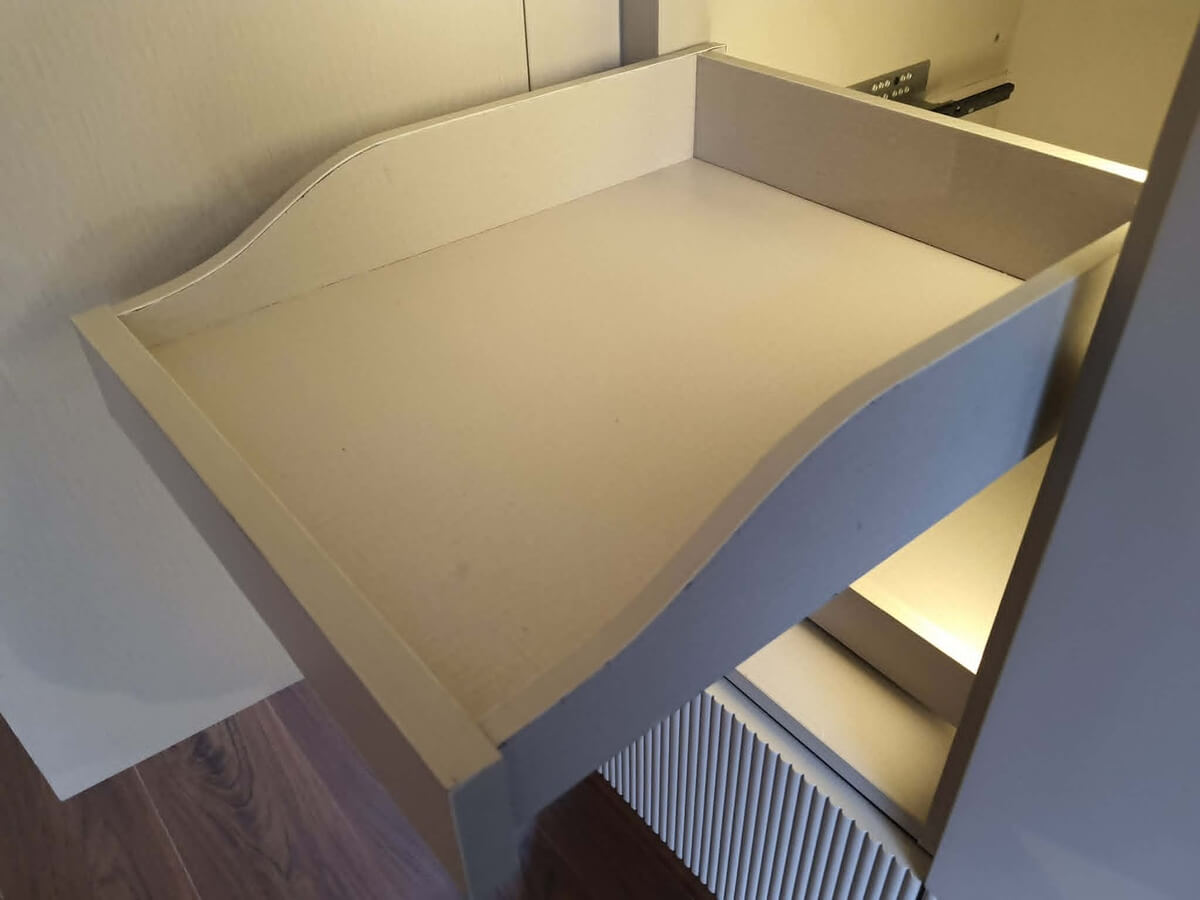
The back of a shelf — the side against the wall — gets the same treatment as the front. The underside of a drawer base — the part you never see — gets sealed identically.
In a factory, this is done by machine — uniform pressure, uniform adhesion. By hand, one side gets more glue, one gets less pressure, and the result is a board that starts bowing by the second monsoon.
What goes where in a properly built wardrobe?
Every panel — shelf, shutter, back panel, drawer box, internal divider — gets the same 19 mm blockboard, sealed on both sides.
The finishing layer depends on what you see:
- Laminate wardrobe: laminate goes directly on the sealed blockboard. Two layers: laminate | blockboard | laminate.
- PU or veneer wardrobe: a 4 mm HDMR sheet goes on the visible surface — because HDMR gives the smoothness PU demands. Three layers: PU or veneer | HDMR overlay | sealed blockboard.
Think of it as a cross-section. The structural board is always blockboard. The finish on top changes depending on the look you want. The strength underneath does not.
What does failure look like when the wrong board is used?
A wardrobe built on HDMR as the structural board — instead of blockboard — starts showing problems within two to three years:
- Shelves sag under folded clothes
- Screws loosen at hinge points — shutters droop
- Edges swell in humid months
- Drawers drag — channel mounting points compress
- Shutters drift — doors that once closed flush now leave gaps
You will not see any of this in the showroom. You will see it when you are pulling open a drawer in the third monsoon and the channel feels rough.
That is the board talking. And by then, rebuilding is the only fix.
How do you verify what board is actually being used?
Ask your furniture designer and manufacturer to show you the board before a single cut is made. Ask them to cut a small piece and show you the cross-section.
- Tightly packed timber strips with no voids = decent blockboard
- Gaps, loose strips, or visible air pockets = the board will not hold
If your maker cannot or will not show you the board — that tells you what you need to know.
Read next
Frequently Asked Questions
Is HDMR good for wardrobes?
What is better — plywood or HDMR?
What is the best board for wardrobe shutters?
Does HDMR warp?
Should wardrobes be laminated on both sides?
What is the most durable board for custom furniture?
Is plywood the same as blockboard?
How can I check if my wardrobe uses genuine blockboard?
If this raised more questions than it answered — that's the beginning of a great conversation. Reach out with your questions or list of topics you'd like covered next!
Talk to Himani on WhatsApp