Modular Kitchen vs Custom Kitchen in Gurgaon — Which One Actually Fits Your Cooking?
Both are factory-made. Both use similar materials. The difference is whether the kitchen was designed around a system — or around the person who cooks.
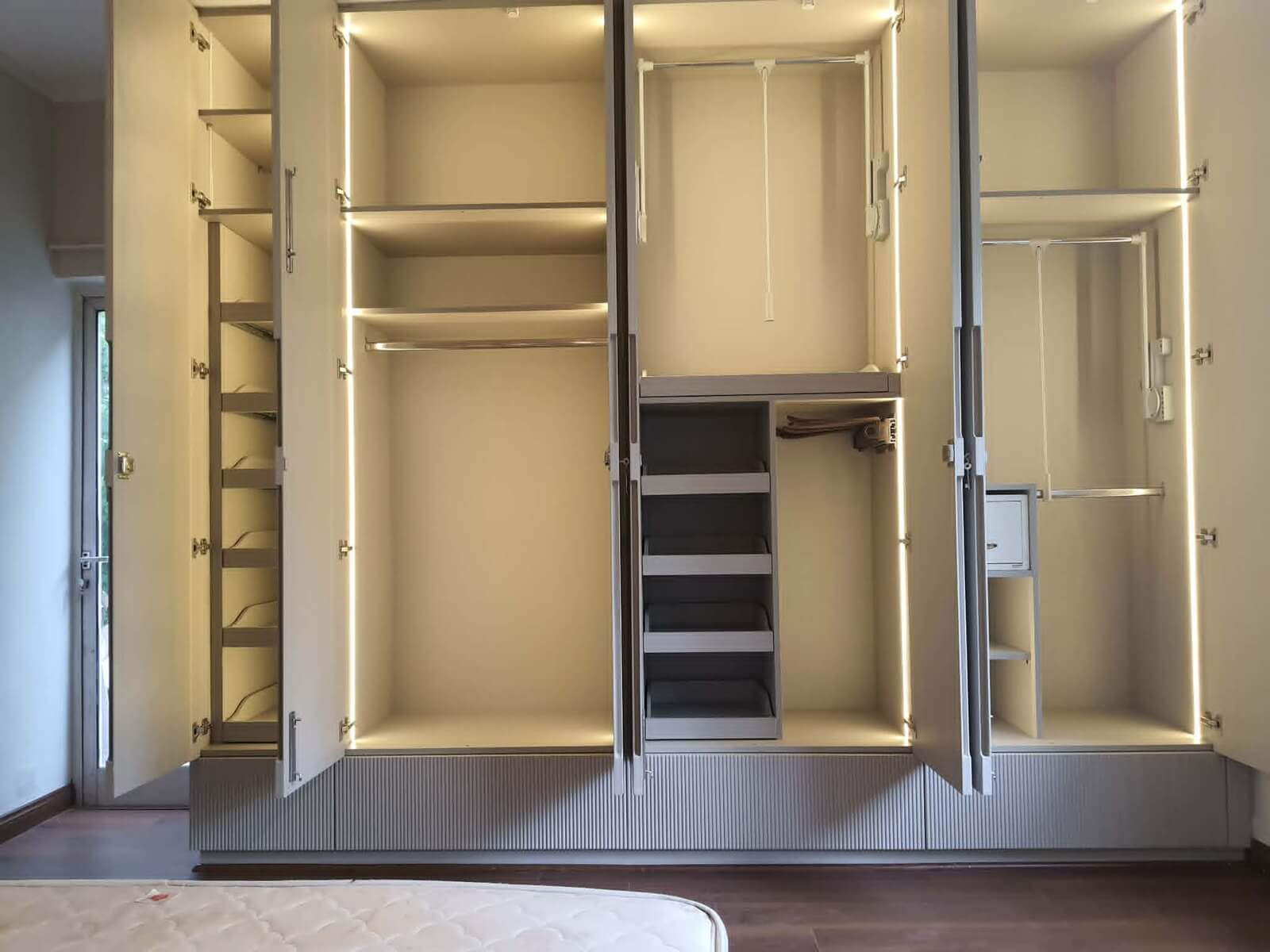
A modular kitchen and a custom kitchen can look identical when finished. Same veneer. Same hardware. Same countertop.
The difference is underneath — in how the layout was decided, what the storage was designed for, and whether anyone asked how you actually cook before the first cabinet was ordered.
What modular kitchens do well
A modular kitchen from a reputed Gurgaon brand offers speed, predictability, and a factory-consistent finish. The price is largely fixed. The timeline, while dependent on site readiness and society access rules, is typically faster than a from-scratch custom design.
For a straightforward kitchen — standard geometry, standard appliance package, sensible existing layout — a modular system can be the right answer. There is no shame in choosing modular when the situation calls for it.
Where modular kitchens meet their limit
A modular kitchen is system-led customization.
You choose from:
- Predefined carcass dimensions
- Compatible accessories within that system's ecosystem
- Available hardware from the brand's catalogue
- Standard configurations designed to work with the brand's baskets, pull-outs, and fittings
The layout adapts to what the system can accommodate. The user adapts to the layout.
For many kitchens, that works fine.
For a kitchen where the cooking is serious, the cookware is heavy, the ingredients are bought in bulk, and the workflow is specific to the family — the system's constraints start showing.
What a custom kitchen does differently
A custom kitchen is brief-led design.
The designer starts from:
- Who cooks in this home — and how?
- What appliances are used daily versus stored?
- What cookware exists — kadhais, pressure cookers, tandoor trays, festive serving pieces?
- What is bought in bulk — rice, dal, oil, spices in quantities a standard pantry unit was not designed for?
- Where does the person stand when cooking — and what should be within arm's reach?
- How many people cook simultaneously?
- What is the room geometry — corners, columns, service locations, window placement?
The kitchen is then engineered around those answers.
A custom kitchen can still use standard appliance dimensions, standard drawer runners, standard sink sizes. The design is custom because the system around those components is intelligently resolved for this particular household — not because every millimetre has to be exotic.
The real difference is not "Indian vs European"
It is simpler than that.
A modular system cannot know what this particular household stores and cooks. It offers a well-engineered set of options. The homeowner selects from them.
A custom kitchen starts with the family's actual inventory, workflow, and cooking habits — then designs the storage, layout, and construction around them.
That is the distinction:
- Modular: system → configuration → user adapts
- Custom: person → possessions → habits → workflow → spatial constraints → furniture
What Indian cooking specifically demands
This is where the gap between a system-led kitchen and a brief-led kitchen becomes tangible:
- Deep base storage for pressure cookers, kadhais, and heavy cookware that standard-depth cabinets struggle with
- Spice storage within arm's reach of the burner — not across the kitchen in a separate pantry unit
- Bulk ingredient storage — rice, dal, oil purchased in quantities that no standard pantry module anticipates
- Chimney selection based on cooking intensity — rated suction is not the same as installed performance. Duct length, bends, diameter, and filter resistance all affect the actual extraction. A number on the box is not enough.
- Wet and dry zone separation — critical when the cooking involves tempering, frying, and water-intensive preparation simultaneously
- Utensil storage matched to the collection — Indian households own more serving pieces, festive cookware, and specialty items than any standard template accounts for
When modular is genuinely the right choice
- Straightforward kitchen geometry — no awkward corners, columns, or service shaft complications
- Standard appliance package that fits the system's dimensions
- The available modules already solve the storage problem
- Speed and predictability are the priority
- The homeowner values the showroom experience and brand warranty infrastructure
A good modular kitchen from a good brand is not a bad kitchen. It is a well-engineered system designed to serve a wide range of households.
The question is whether your household falls within that range — or outside it.
When custom earns its place
- Serious cooking with specific workflow needs
- Heavy, bulky cookware that standard cabinets cannot comfortably hold
- Bulk ingredient storage that exceeds standard pantry capacity
- Unusual kitchen geometry — the room does not fit standard module sizes cleanly
- The homeowner wants to specify the construction — board, hardware, finish — and verify it at the facility
- The kitchen is expected to last 15+ years of daily, intensive Indian cooking
Read next
Frequently Asked Questions
Is a modular kitchen better than a custom kitchen?
How much does a custom kitchen cost in Gurgaon?
How long does a custom kitchen take?
Can a modular kitchen be customised?
What kitchen is best for Indian cooking?
What is the difference between system-led and brief-led kitchen design?
How do I choose a kitchen designer in Gurgaon?
Should I get a modular or custom kitchen for a new apartment in Gurgaon?
If this raised more questions than it answered — that's the beginning of a great conversation. Reach out with your questions or list of topics you'd like covered next!
Talk to Himani on WhatsApp