Your Wardrobe Was Measured. It Was Never Designed.
The difference between a wardrobe that stores your clothes and one that gives you your morning back.
Most wardrobes are designed around standard dimensions and template layouts. A hanging section, three shelves, a drawer stack, maybe a mirror on the shutter.
This layout has nothing to do with you — with what you own, what you wear every day, what gets forgotten at the back of a shelf you cannot reach without a stool.
A wardrobe that works is not a bigger wardrobe. It is one that was designed around how you actually live.
What do you own — really?
Before a single measurement is taken, the question is not how wide the wall is. It is what goes inside.
Most people dramatically overestimate how many clothes they hang and underestimate how much they fold. They forget about the 15 sarees wrapped in muslin that come out twice a year. The bags — structured bags that lose shape when stacked. The belts, the scarves, the seasonal bedding, the suitcases sitting on top of the wardrobe because there is nowhere else.
A wardrobe designed around what you own starts with an inventory — not a floor plan:
- What hangs? What folds? What is long, what is short?
- What do you reach for every morning — and what do you touch once a year?
- What do you own the most of? Shoes? Bags? Jewellery?
- Where is the pile that keeps growing because nothing makes sense for it?
- What makes you feel good when you open that door — and what makes you sigh?
That is the information that turns a wardrobe from a box with shelves into something that anticipates your day before you do.
The everyday closet versus the formal closet
One of the most useful design decisions — and one almost nobody makes — is splitting your wardrobe into zones.
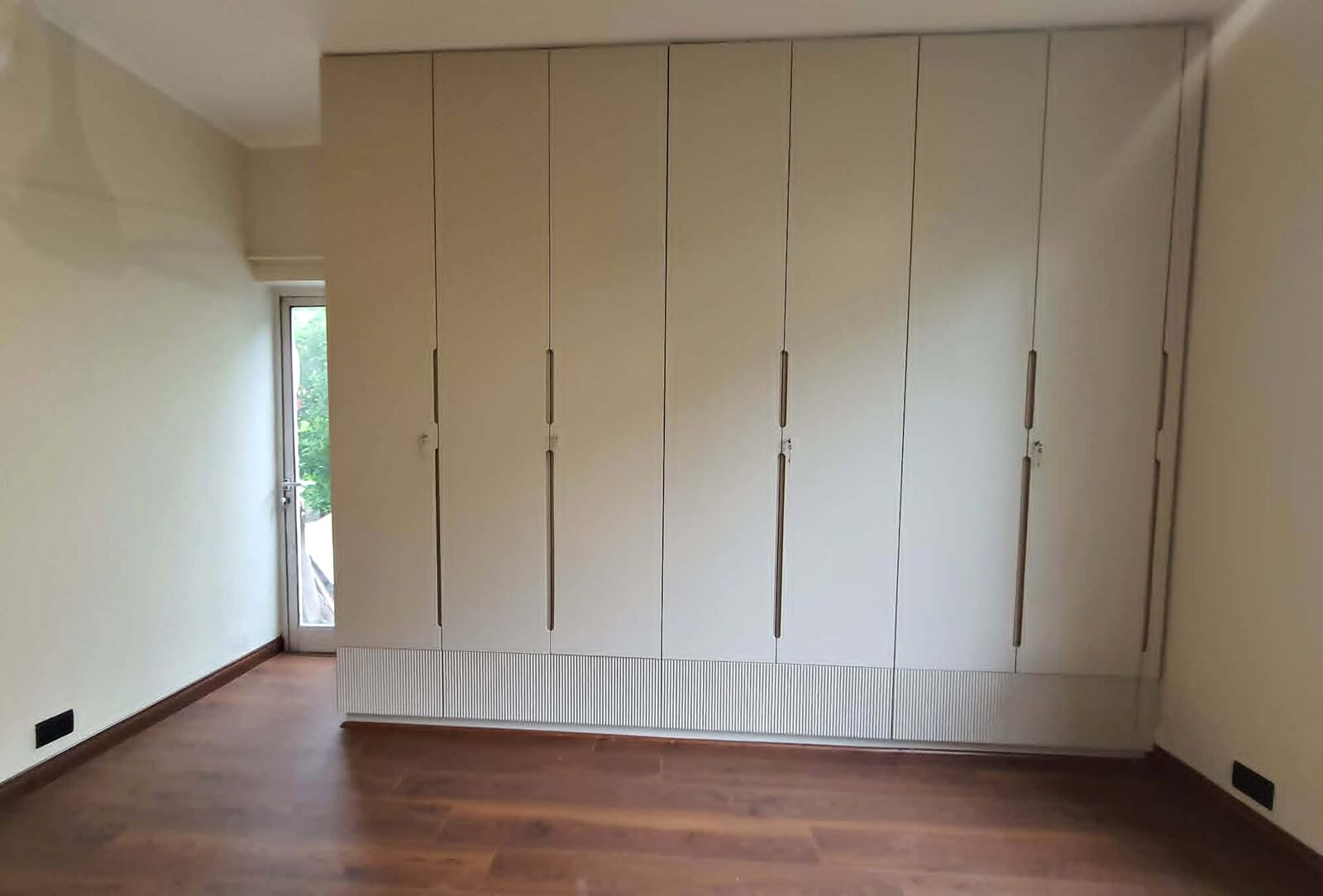
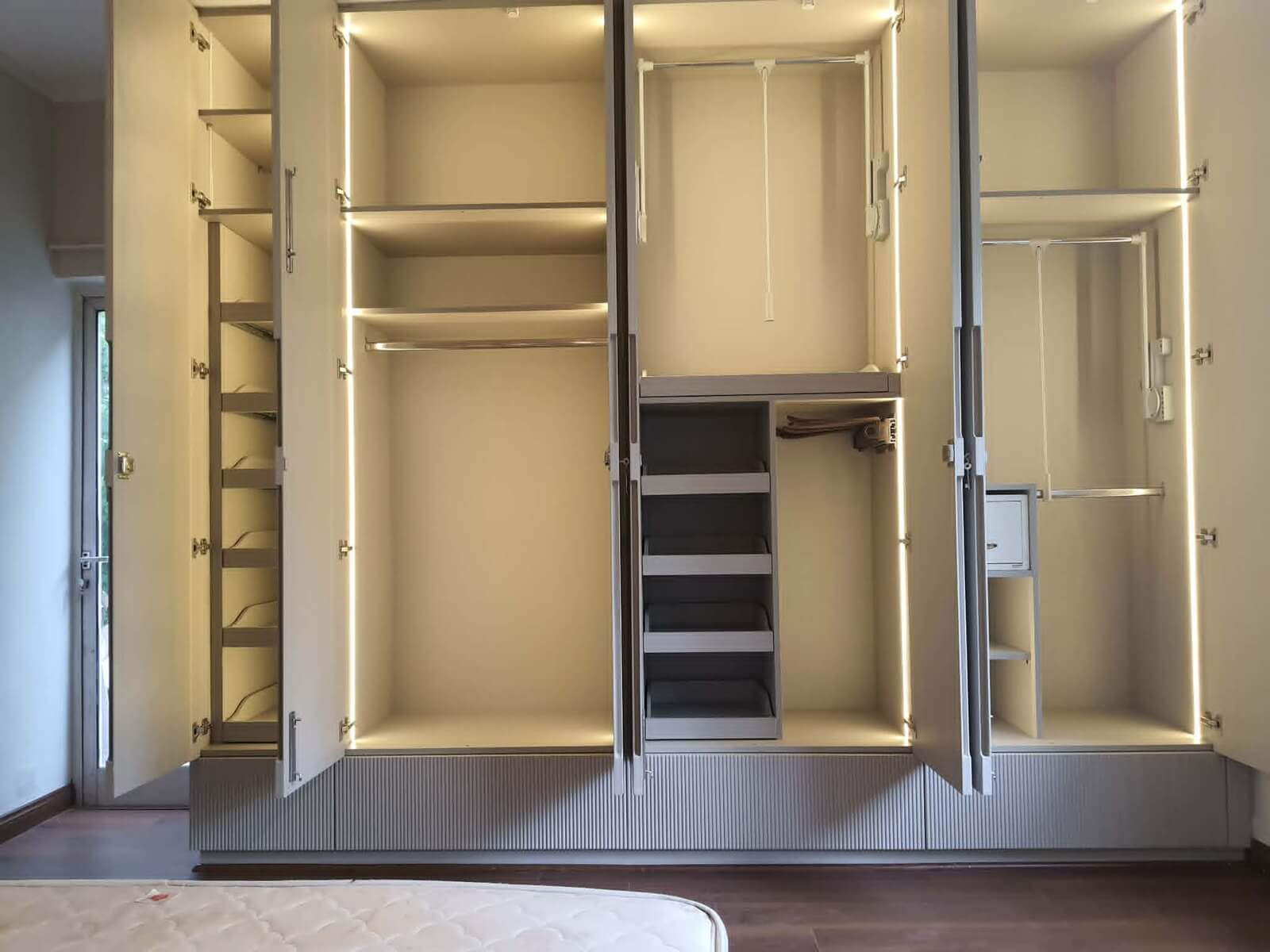
I designed a seven-shutter wardrobe recently. Three double shutters and one single. From left to right:
- Long hanging closet — kurtas, dresses, coats, anything full-length
- Everyday closet — the clothes you reach for without thinking at 6 AM
- Formal closet — occasion wear, wedding outfits, things you touch twice a month
The single shutter on the far left? Six drawers. I called it the lifestyle closet — gifts, travel accessories, woollens, bags she does not use daily but refuses to store on a shelf where they collapse.
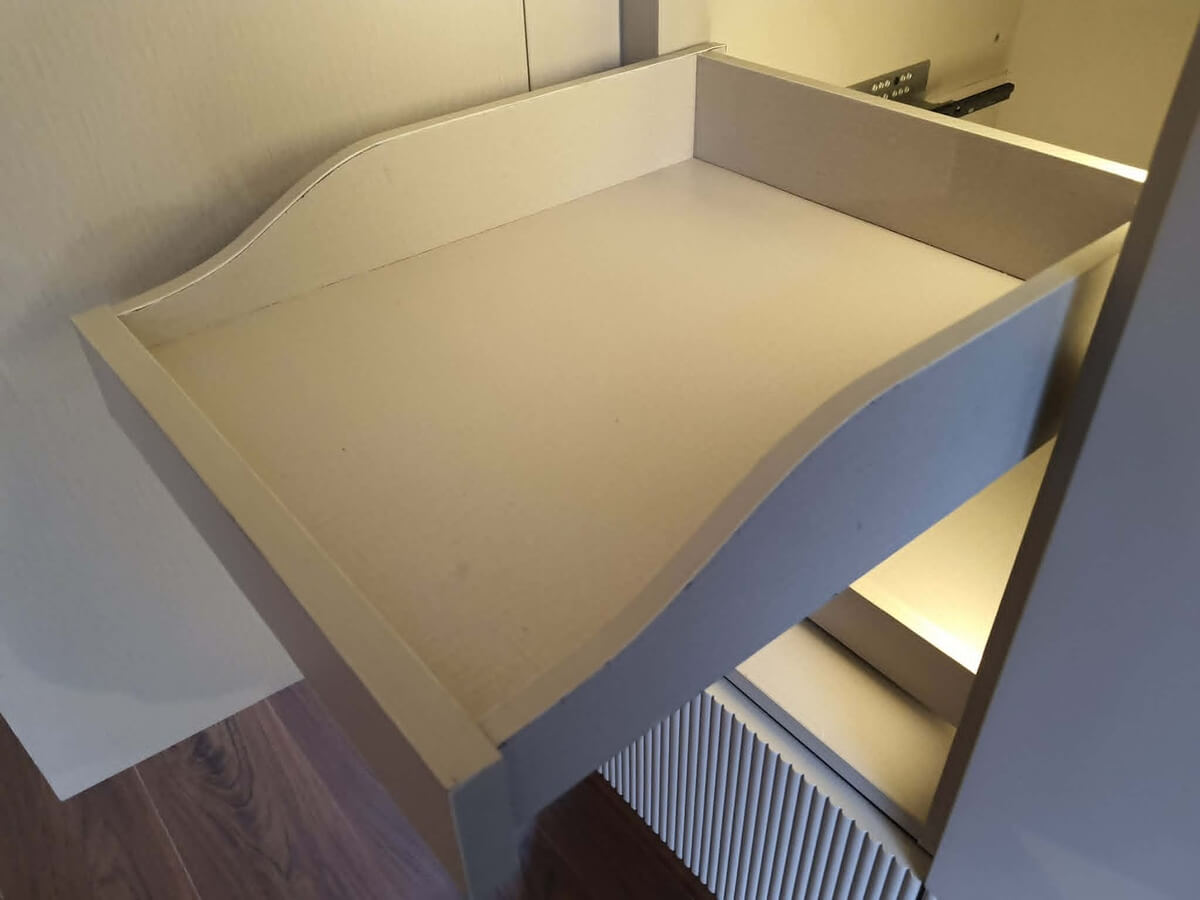
She owns 50 pairs of shoes. Every pair now has a dedicated pull-out compartment sized to fit. Not a generic shoe rack. Not a shelf. A double decker set of drawers!
When everyday and formal are mixed into one wardrobe with a template layout, the everyday clothes get buried behind the occasion clothes. The things you need are always behind the things you do not. Every morning starts with a small friction that builds into the feeling that you never have enough space — even when you do.
Dead storage versus wasted prime real estate — two different problems
Dead storage is space you physically cannot access without effort.
The loft — you need a stool. The top shelf of the closet, right below the loft — your hand does not reach. Corners where the depth exceeds your arm's length. Dead storage fills up with things you forget you own.
Wasted prime real estate is the opposite problem.
Eye-level. Arm's reach. Easy access. The most valuable real estate in your wardrobe — and it is full of chaos. Things stacked, overflowing, shoved in because there is no designated space. You cannot find what you need. You pull one thing out and three fall.
Design30 attacks both.
Dead storage gets reorganised — seasonal items go into dedicated compartments. Garment pull-downs bring ceiling-height storage to arm level, replacing the stool entirely.
Prime real estate gets optimised — every shelf height matches what it holds. No 12-inch shelf holding 8-inch stacks. No bulk purchases at eye level when they belong in the utility. No bags collapsed on each other when they should be standing upright in compartments.
The accessories that earn their place
Wardrobe accessories are an industry. Trouser pull-outs. Tie racks. Belt hooks. Shoe carousels. Jewellery trays. Motorised hanging rods.
Most of them are catalogue fillers.
The test is simple: will you use it every week?
- A garment pull-down brings ceiling-height clothes to arm level. Useful every single day. Worth every rupee.
- Illuminating the closet interior with LED strips — worth it. You see everything without squinting.
- Corner accessories that look beautiful empty and become useless the moment things go in — skip.
- A motorised tie rack? A shoe carousel? Solutions looking for problems. Keep the shelf space instead.
Before approving any accessory, ask: will I use this weekly? If no — that is not an accessory. That is space lost.
What a designed wardrobe actually changes
It changes your morning. Not dramatically. Quietly.
The shirt is where your hand goes. The bag is standing upright. The sarees are flat, visible, accessible. The things you wear daily are at eye level. The things you wear twice a year are stored properly but out of the way.
The room feels bigger. Not because the wardrobe is smaller — because when storage works, nothing spills out. Nothing piles on chairs. Nothing sits in bags on the floor temporarily. The wardrobe contains the clutter because the clutter has a place.
Read next
Frequently Asked Questions
How should a wardrobe be divided internally?
How deep should a wardrobe be?
How do I maximise wardrobe storage without making the room smaller?
Which wardrobe accessories are actually worth buying?
What is the difference between dead storage and wasted prime real estate?
What is Design30?
Can a wardrobe be designed for someone with 50 pairs of shoes?
What is the difference between custom storage and modular storage?
If this made you look at your wardrobe differently — that's the beginning of a great conversation. Reach out with your questions or list of topics you'd like covered next!
Talk to Himani on WhatsApp