What Your Interior Designer Should Have Asked You — But Probably Didn't
The quality of the design is never better than the quality of the brief. And the brief is only as good as the questions behind it.
You hired an interior designer in Gurgaon. They showed you mood boards. They showed you 3D renderings. They showed you material samples.
Did they ask you what you own?
Not what style you like. Not which Pinterest board inspires you. What you actually own — the clothes, the shoes, the cookware, the books, the seasonal things, the things on chairs, the things in bags on the floor.
Because that is where design starts. And it is a question many design briefs never get to.
The brief nobody writes
A design brief is not "modern luxury with warm tones." That is a mood. A brief is:
- How many people live here — and how do their routines overlap?
- What does the morning look like — who needs the bathroom first, who dresses where, who leaves earliest?
- What do you own the most of — and where does it currently live?
- What is on chairs, counters, and floors right now — because it has no proper home?
- How do you entertain — how many guests, how often, sit-down or casual?
- What hobbies, passions, or collections need space?
- What bulk purchases does the household make?
- What annoys you most about your current home?
- What would make your morning feel effortless?
These are not luxury questions. They are basic design questions. Without them, the designer is decorating — not designing.
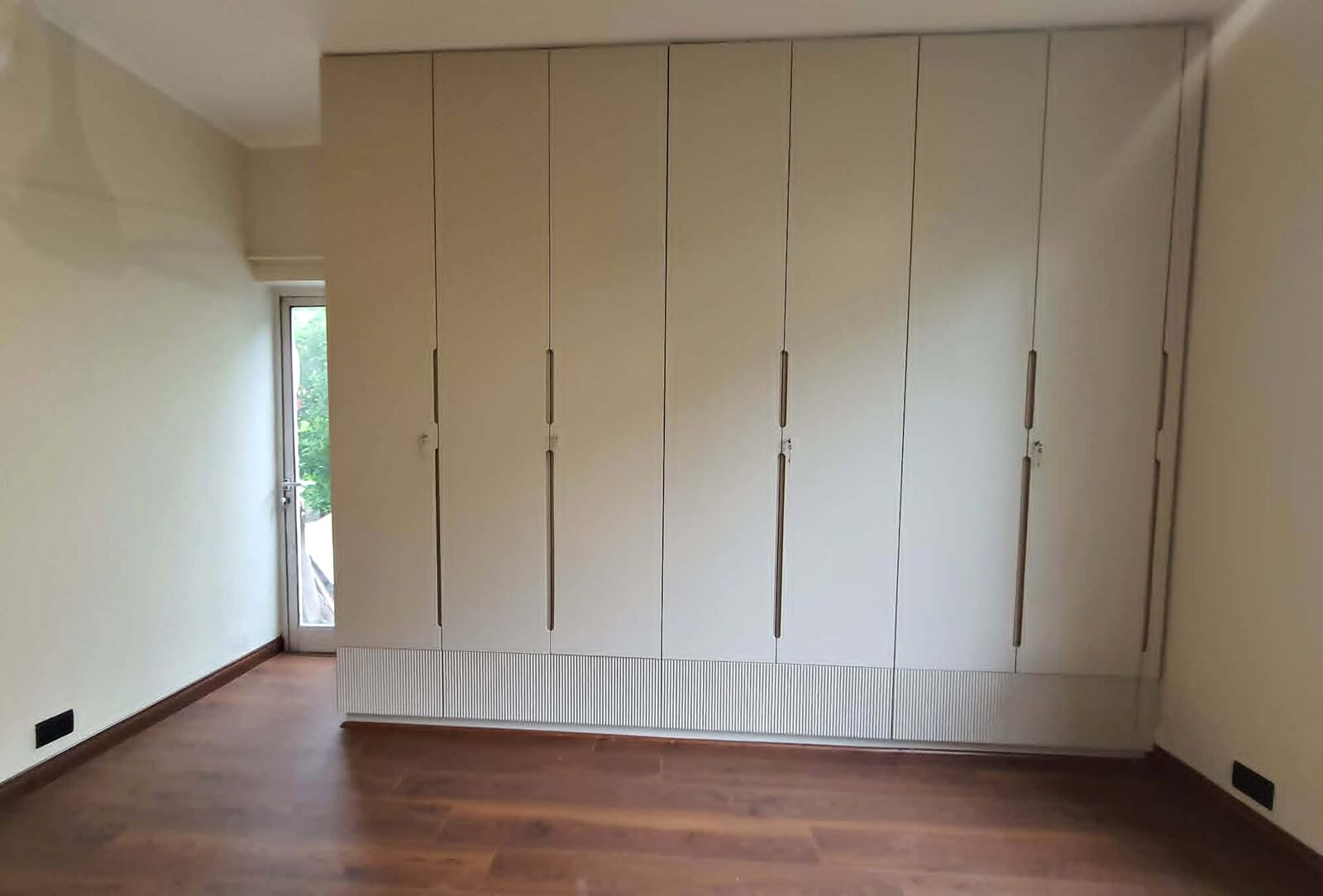
The wardrobe question most designers skip entirely
"How many feet of wardrobe do you need?"
That is the question most interior designers ask.
The question they should ask: "What actually needs to live inside it?"
- What hangs? What folds? What is long, what is short?
- How many sarees? How many suits? How many pairs of shoes?
- What bags do you own — and do they lose shape when stacked?
- What jewellery, watches, accessories need dedicated space?
- What is seasonal — pulled out twice a year?
- What do you reach for every single morning without thinking?
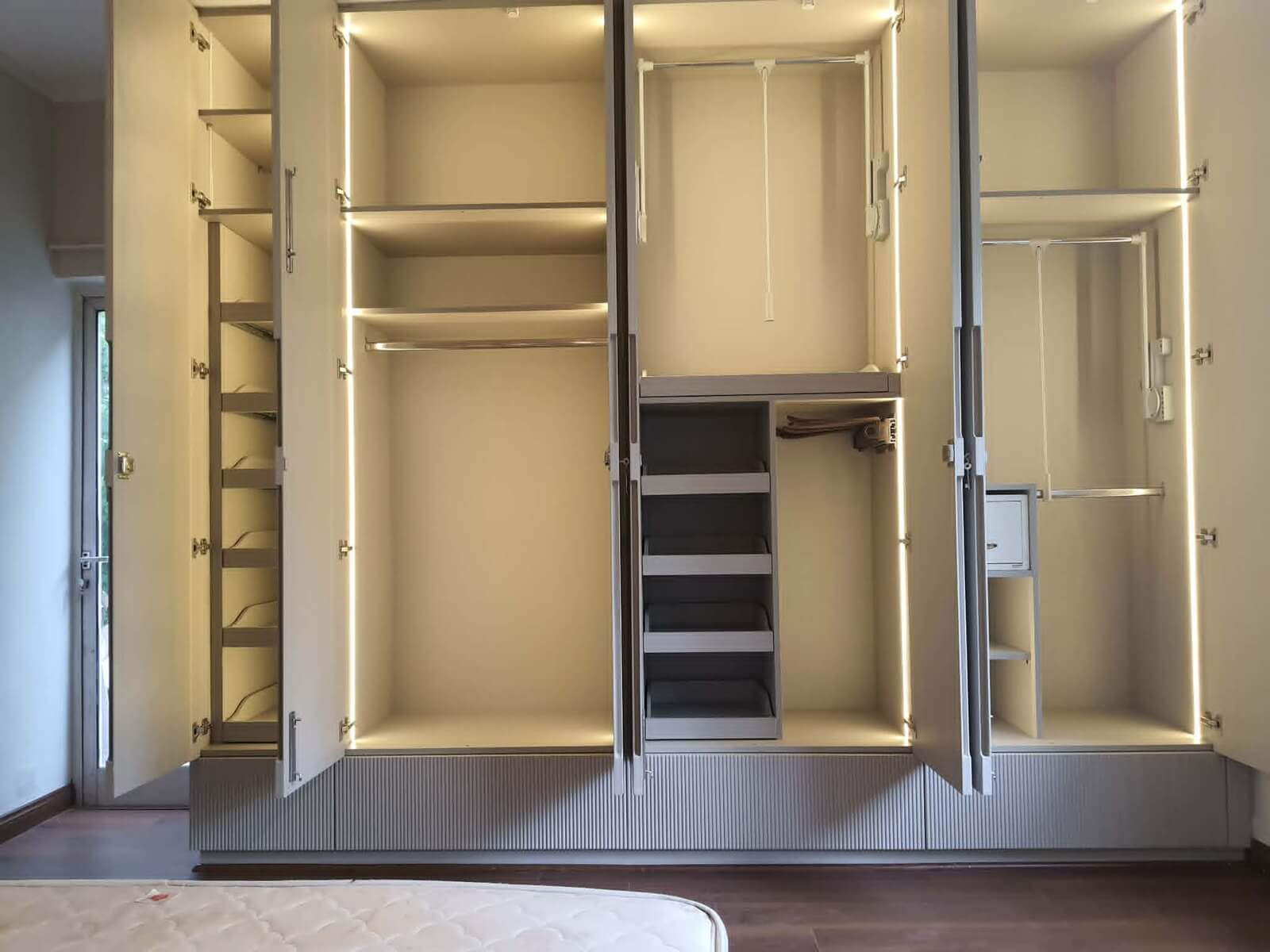
A wardrobe designed without this inventory is a box with shelves. A wardrobe designed after it is a system that anticipates your day.
This is the Design30 audit. It identifies where storage volume is being wasted — typically around 30% — and designs it back before a single board is ordered.
The kitchen question most designers skip
"What layout do you prefer — L-shape, U-shape, or island?"
That is the question most designers ask.
The question they should ask: "Who cooks in this home — and how?"
- What cuisines? What cookware? What quantities?
- What is bought in bulk?
- Where should the spices be relative to the stove?
- Do two people use the kitchen at the same time?
- What appliances are used daily versus stored?
- What currently frustrates the cook?
A kitchen layout chosen from a catalogue and a kitchen designed around a cooking brief look different — and they perform very differently by year two.
The furniture question nobody thinks to ask
"What furniture do you want?"
The better question: "What does the room need to do — and what should the furniture contribute to that?"
- Does this room need to feel open or anchored?
- Should storage be visible or hidden?
- What proportion does the furniture need relative to the ceiling, the windows, the light?
- Is this room for daily use or occasional use — and does the furniture match that frequency?
- What needs to be within arm's reach? What should disappear entirely?
Furniture is not the last decision in a room. Furniture is too significant a visual and financial element to leave until the end. It should be the first conversation — not an afterthought fitted around the wall colour.
The life question that changes everything
The most important question an interior designer can ask is not about the home at all.
"How is your life changing?"
- Are children coming? Are they leaving?
- Are parents moving in?
- Is someone working from home now?
- Has a hobby become serious — cooking, fitness, art, music?
- Is travel increasing? Is entertaining increasing?
- Is the household getting simpler or more complex?
Good furniture should have capacity for the life that comes next — not just the life that exists today. A wardrobe designed for this year's clothes and next year's changes is worth more than one designed for a photograph.
Why these questions matter more than the mood board
A mood board tells the designer what the home should look like.
These questions tell the designer what the home should do.
The difference between a home that photographs well and a home that works well is almost always in the brief — in whether someone sat down and asked the questions that matter before opening a catalogue.
Read next
Frequently Asked Questions
What should an interior designer ask before starting a project?
What is a design brief?
What is Design30?
Why do some designed homes still feel frustrating?
What is the most important question a designer should ask?
Should furniture design come before or after interior design?
If this raised more questions than it answered — that's the beginning of a great conversation. Reach out with your questions or list of topics you'd like covered next!
Talk to Himani on WhatsApp