Why a Luxury Interior Design Plan Can Fail at the Furniture Stage
The walls are perfect. The lighting is beautiful. And then the furniture arrives — and something feels off.
The apartment has been designed by one of the best interior designers in Gurgaon. The ceiling detail is exquisite. The flooring is imported. The lighting creates exactly the mood that was intended.
Then the furniture arrives.
The wardrobe looks smaller than the 3D rendering suggested. The entertainment unit does not quite fill the wall the way it was supposed to. The kitchen drawers are a little shallow. The dining table is slightly too wide for comfortable circulation.
Nothing is dramatically wrong. But nothing feels quite right either.
The gap between the design and the furniture
Interior design operates at the scale of the room. Furniture design operates at the scale of the object.
A room can be perfectly proportioned, perfectly lit, perfectly finished — and still feel incomplete if the furniture inside it was not designed with the same precision.
That gap shows up in three places:
1. Proportion errors that no finish can fix.
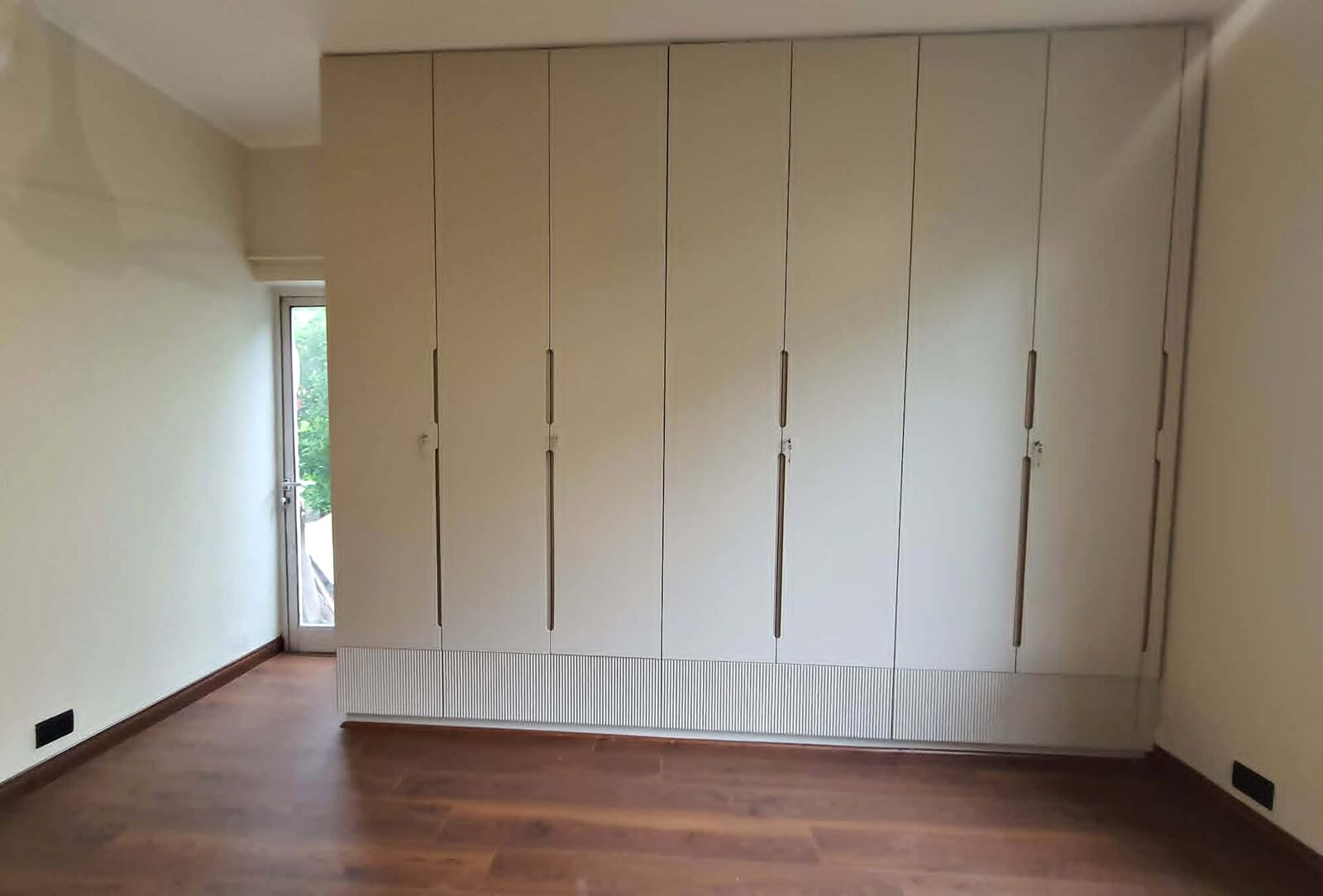
A wardrobe that was specified as "8 feet wide, floor to ceiling, veneer finish" can arrive and look visually heavy — because nobody checked how the shutter divisions, the handles, the base detail, and the crown moulding relate to the room's proportions.
The specification was accurate. The design was missing.
2. Storage that was planned, not designed.
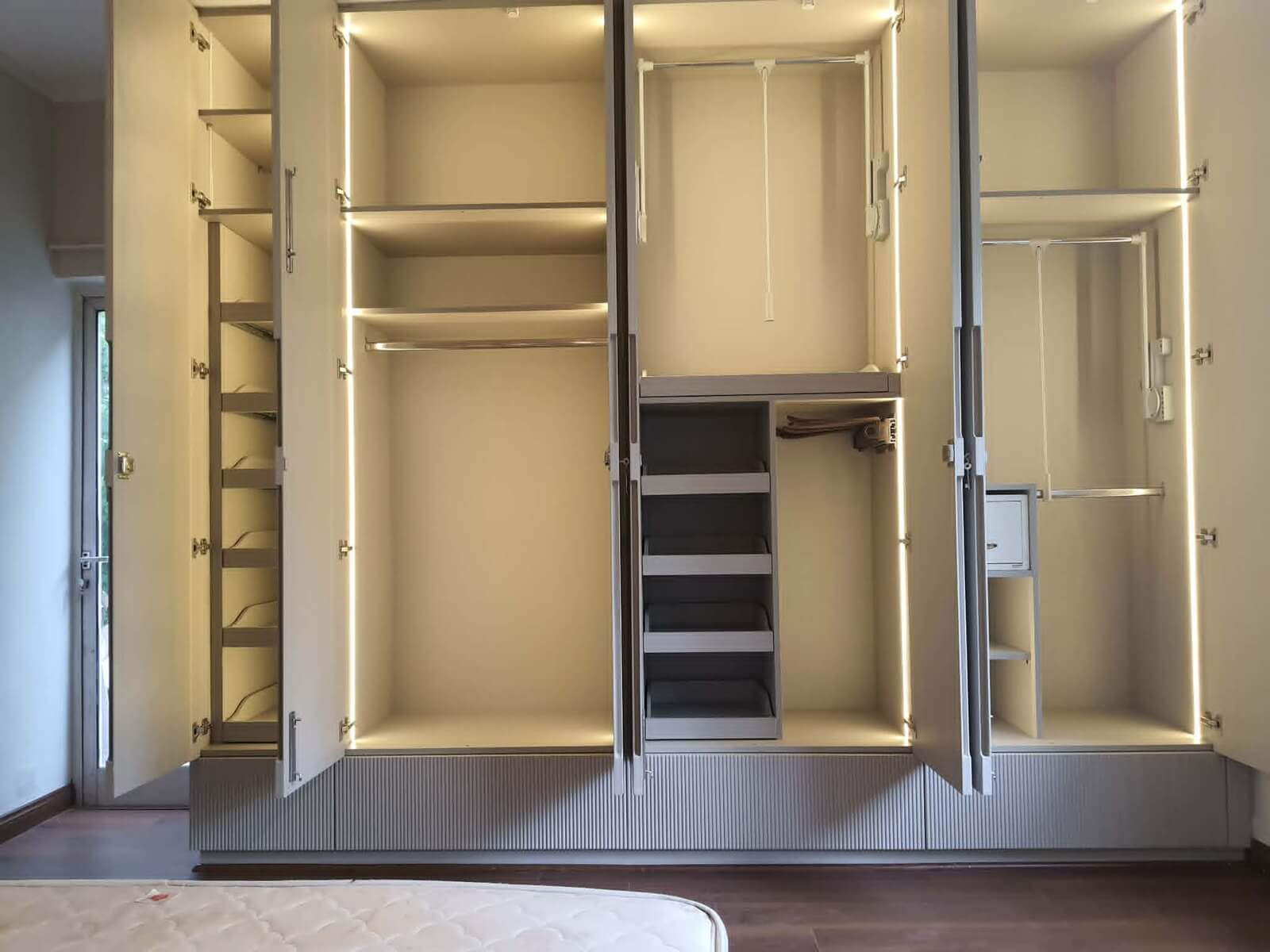
The interior designer allocated 12 feet of wardrobe in the master bedroom. That is planning. But who decided what goes on each shelf? Who matched the shelf heights to the folded stacks? Who separated everyday from formal? Who designed the accessory drawers around the family's actual jewellery, watches, and bags?
Planning says "12 feet of wardrobe here." Designing says "here is exactly what lives inside those 12 feet, and why."
3. The furniture was outsourced — and the chain created drift.
The interior designer drew the furniture. A vendor manufactured it. An installer assembled it. Between the drawing and the finished piece, small decisions were made by people who were not in the original design conversation.
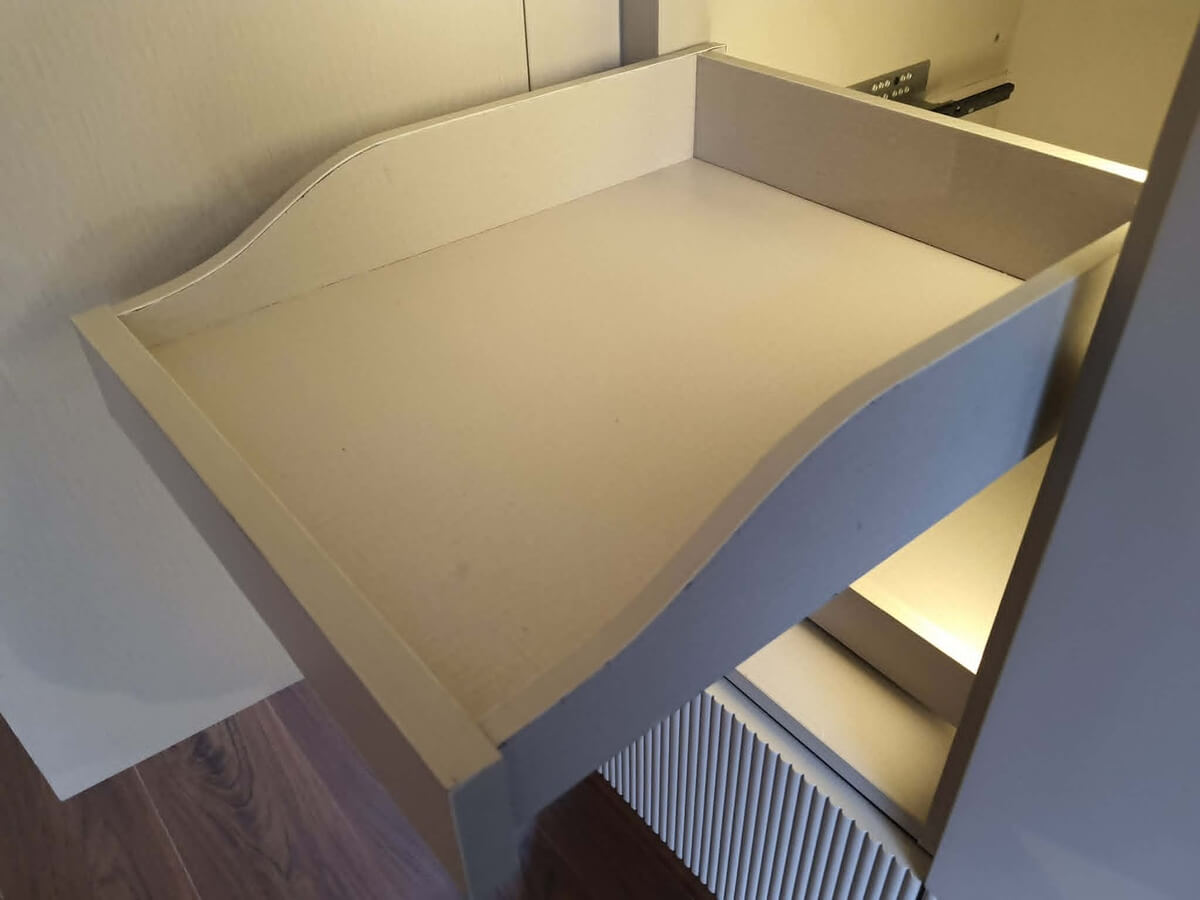
A drawer depth changed. A hardware model was substituted. A shutter thickness shifted. Each change is small. Together, they create a gap between what was intended and what was delivered.
Why this happens even with excellent interior designers
It is not about competence. It is about bandwidth.
An interior designer managing a full luxury apartment is responsible for dozens of decisions — walls, ceilings, electrical, plumbing, flooring, lighting, paint, stone, hardware, furniture, curtains, art, accessories, vendor coordination, site supervision, timeline management.
Furniture is one category among many.
A furniture designer handles one category — and goes deeper into it than anyone managing twenty categories simultaneously can.
The wardrobe gets a Design30 audit — an inventory of what the family owns, how they dress, what they reach for daily. The kitchen gets a cooking brief — who cooks, what cookware, what quantities, what workflow. The entertainment unit gets proportioned to the wall, the ceiling, and the seating distance.
That depth of attention is not a criticism of interior designers. It is an argument for specialization where it matters most.
The most expensive version of this problem
The homeowner realises the furniture does not work — after the interior design is complete. The walls are finished. The lighting is installed. The flooring is done.
Now the furniture has to work within those fixed constraints.
If the furniture had been planned earlier — before the electrical points were frozen, before the ceiling detail was finalised, before the skirting was installed — the constraints would have been different. The furniture could have influenced the architecture instead of working around it.
That sequence — architecture first, furniture last — can leave the furniture working around decisions that were already frozen. And it is the sequence that creates the most expensive compromises.
The fix is not replacing the interior designer
It is adding a furniture specialist to the team — early enough to influence the brief, the electrical, the lighting, and the proportions.
The interior designer handles the space. The furniture designer handles every piece that lives inside it. Neither compromises. Both contribute their depth.
Read next
Frequently Asked Questions
Why does furniture sometimes look wrong even in a well-designed apartment?
Should I hire a separate furniture designer?
When should a furniture designer be brought into the project?
What is the difference between planning and designing furniture?
Can an interior designer and furniture designer work together?
If this raised more questions than it answered — that's the beginning of a great conversation. Reach out with your questions or list of topics you'd like covered next!
Talk to Himani on WhatsApp