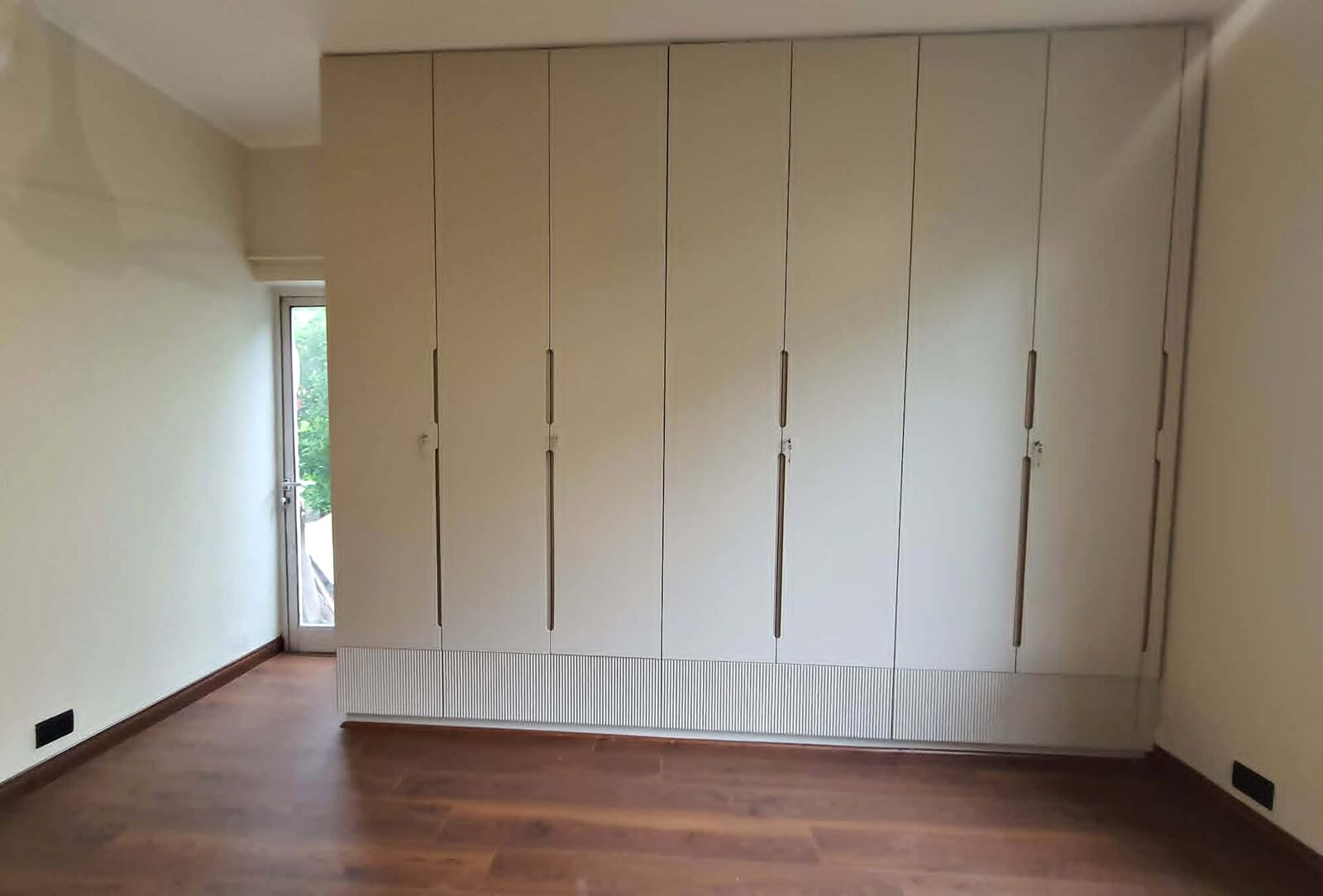
What Goes Inside a Well-Built Wardrobe — The Complete Internal Design Guide
The outside gets the compliments. The inside decides whether your morning starts with calm or chaos.
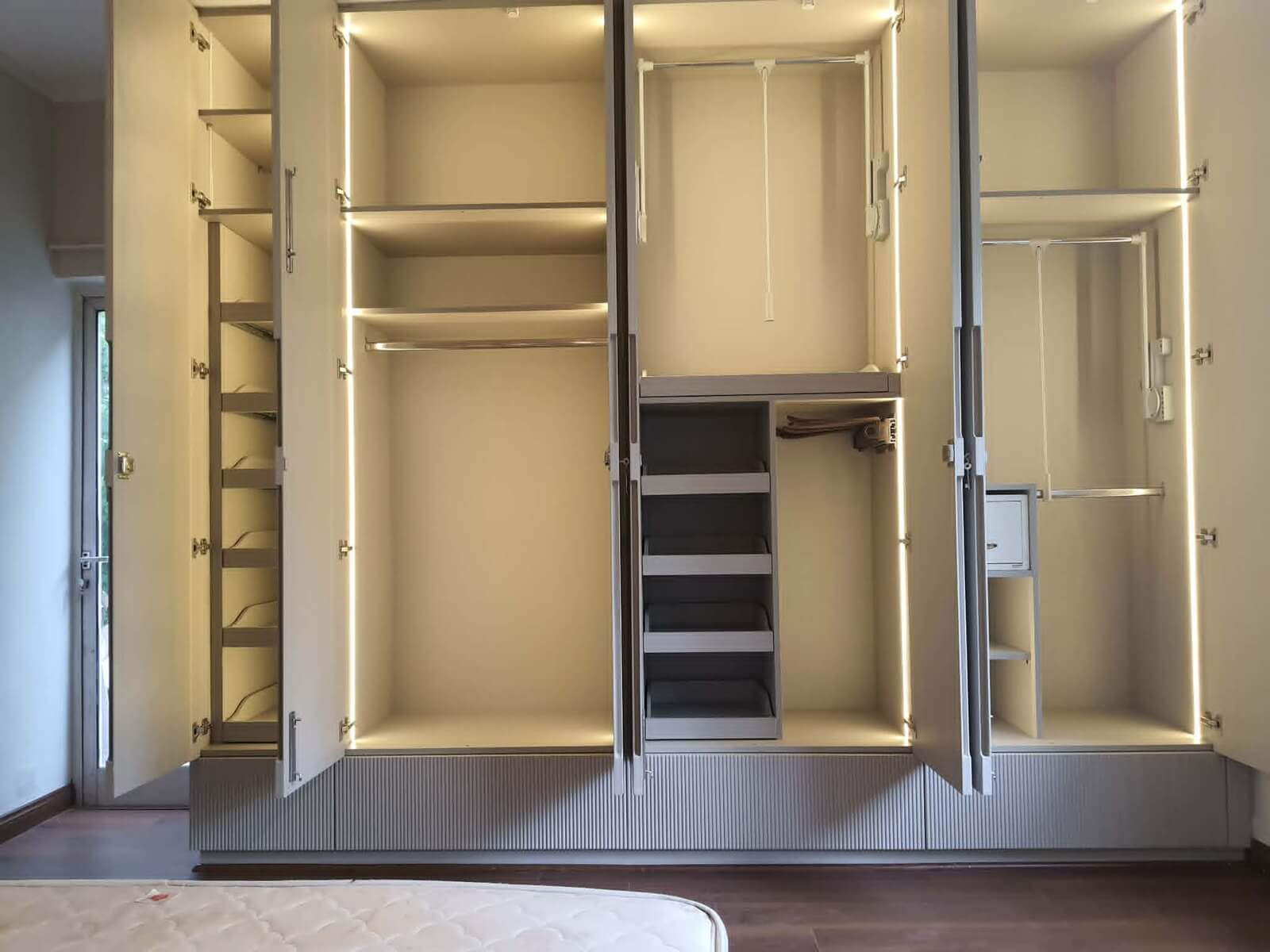
A wardrobe can look stunning from the outside and frustrate you every single morning from the inside.
The internal design — what goes where, at what height, at what depth, in what configuration — is the difference between a wardrobe that works for you and one that you work around.
This is what a Design30 audit looks at before a single shelf is drawn. Design30 is a methodology built on a simple principle — the Rule of 30: most finished homes lose 30% of their storage volume inside wardrobes that were measured but never designed for the life inside. The audit finds that lost space and designs it back.
Here is how.
Step 1: Take stock of your life
Before measuring the wall, take stock of the life that has to fit inside it.
- Open every closet. Every drawer. Every shelf.
- What is overflowing? What has no home?
- What do you own the most of — sarees, suits, shoes, bags, jewellery, skincare?
- What do you reach for every morning without thinking?
- What do you touch once a year but cannot part with?
- What do you buy in bulk — oils, supplements, seasonal clothing, travel gear?
- Where is the pile that keeps growing because nothing makes sense for it?
The inventory comes before the floor plan. This is a deep exercise — it can take a dedicated session to get right. Working with a professional who knows what to ask and what to look for makes the difference between a list and an actual storage strategy.
A wardrobe designed without this step is a box with shelves. A wardrobe designed after it anticipates your day before you open the door.
Step 2: Identify dead storage and wasted prime real estate
These are two completely different problems, and they need different solutions.
Dead storage is space you physically cannot access without effort:
- The loft — needs a stool every time
- The top shelf just below the loft — your arm does not reach
- Deep corners where things disappear behind other things
- The back 6 inches of a fixed shelf in a 24-inch-deep wardrobe
Dead storage fills up with things you forget you own. Seasonal blankets, old suitcases, that box from the move you never opened.
Wasted prime real estate is the opposite:
- Eye-level, arm-reach — the most valuable zone in your wardrobe
- Full of chaos — things stacked, shoved, overflowing
- You pull one thing out and three fall
- Bulk purchases, seasonal items, and rarely-used things sitting where everyday clothes should be
Design30 attacks both. The methodology — built on the Rule of 30 — starts by mapping where storage volume is being lost. In most wardrobes, it is a combination: dead zones that nobody can reach, and prime zones that are overloaded because nothing else has a designated place.
Dead storage gets reorganised with garment pull-downs that bring ceiling-height hanging to arm level — replacing the stool entirely. Pull-out shelves bring the back of every deep shelf forward. Dedicated seasonal compartments move bulk items out of the prime zone.
Prime real estate gets optimised — every shelf height matches what it holds. Every drawer contains one category. Every zone has a purpose that matches how frequently you use it.
Step 3: Separate everyday from formal — and add a lifestyle zone
The single most impactful design decision most people never make.
Everyday zone: the clothes you wear without thinking — work clothes, casual clothes, gym wear, night clothes, the things your hand goes to at 6 AM. At arm height. Fully visible. Zero stacking. This is where your morning happens.
Formal zone: occasion wear, wedding outfits, seasonal heavy clothing. Higher shelves, deeper compartments, less accessible — because you touch it twice a month, not twice a day.
Lifestyle zone: this is the one nobody plans. Six dedicated drawers for the things that define your life beyond clothes — gifts, travel accessories, fitness gear, woollens, bags you love but do not carry daily, bulk purchases, hobby supplies.
When all three zones are mixed into one wardrobe with a template layout, the everyday clothes get buried behind the occasion clothes. The things you need are always behind the things you do not. Every morning starts with a small friction that builds into the feeling that you never have enough space — even when you do.
Also consider: a laundry rail or hook inside the wardrobe for clothes worn once but not ready for the wash. A dedicated section for sportswear and activewear if fitness is part of the daily routine. These are not extras — they are the difference between a wardrobe that handles real life and one designed for an imaginary one.
Step 4: Match shelf and drawer heights to what they hold
This is where a significant portion of wardrobe volume disappears.
If the shelf height is 14 inches but the folded stack is 9 inches — you are wasting more than a third of the volume on every shelf. Multiply that across the entire wardrobe and the loss is enormous.
Design30 eliminates this by making every shelf height intentional:
- Folded T-shirts and casual wear: 9-10 inch shelf height
- Folded sarees (flat stacks): 6-8 inches — more shelves, thinner stacks, every saree visible
- Folded trousers and jeans: 10-12 inches (they fold thicker than you expect)
- Heavy blankets and seasonal bedding: 16-18 inches — but only in the dead storage zone, never at eye level
- Bags: upright in vertical compartments sized to each bag — never piled on top of each other
- Shoes: individual pull-out compartments, not a generic rack
Template wardrobes give you equal shelves. A designed wardrobe gives you shelves that match your life — and no two wardrobes should have the same shelf configuration.
Step 5: Design the accessories around how you connect with your belongings
This is not just about storage efficiency. It is about the experience of opening your wardrobe.
The things you buy — the jewellery, the shoes, the bags, the accessories, the clothes you save for — are things you love. When they are buried in chaos, stacked on top of each other, crammed into drawers too full to close — the joy disappears.
A well-designed wardrobe interior lets you see everything in one glance. You open the door and the decision is instant — because everything is visible, accessible, and presented the way it deserves.
Accessories that earn their place:
- Garment pull-down: brings ceiling-height hanging to arm level. Replaces the stool. You use it daily. Worth every rupee.
- Interior LED lighting: per-compartment, motion-activated, warm white. You see every colour correctly. No squinting, no shadows.
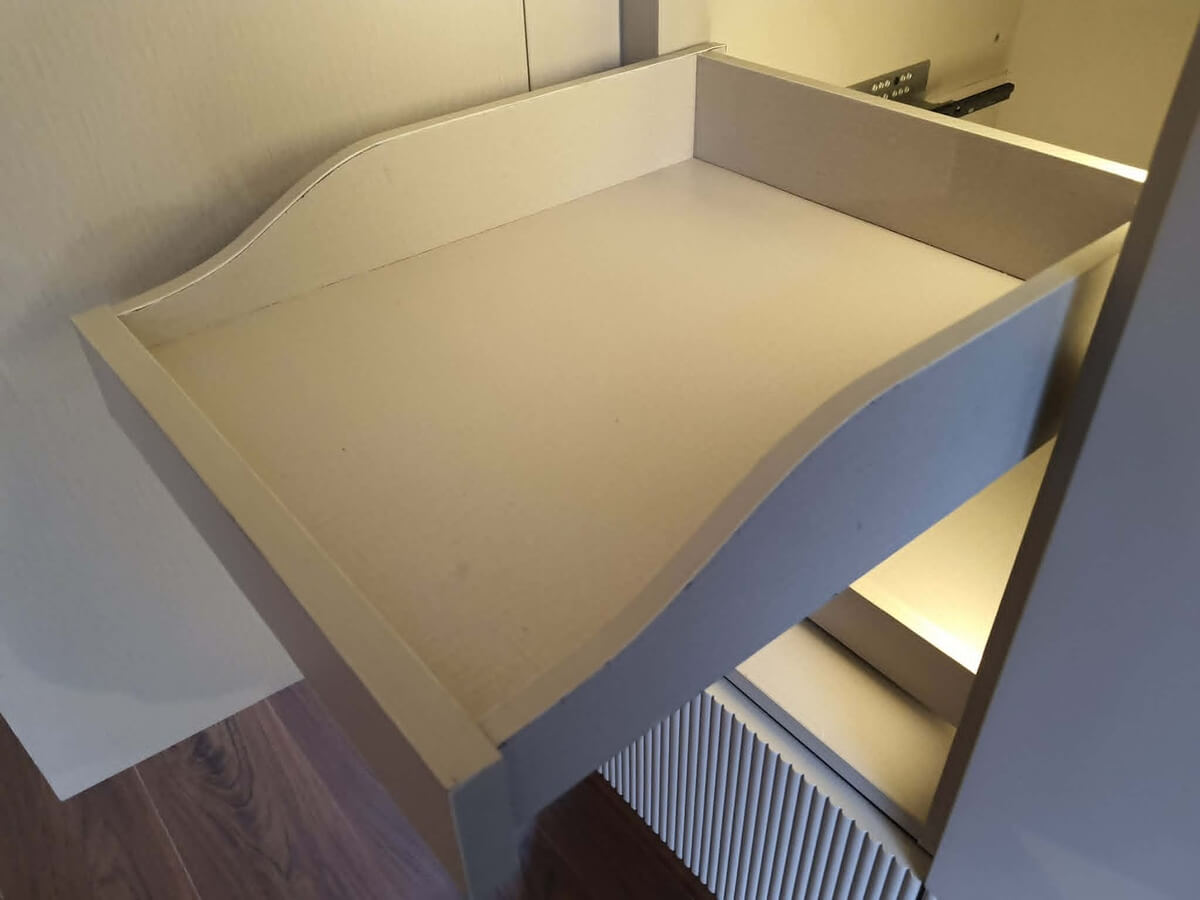
- Pull-out drawers for depth: if the wardrobe is 24 inches deep, pull-outs bring the back forward. No dead zone. This is a default in a well-built wardrobe, not an accessory.
- Vertical bag dividers: bags standing upright in their own compartments. Structure preserved. No collapsing.
Skip: trouser pull-outs (a shelf works better), corner accessories (look beautiful empty, useless when full), shoe carousels (individual compartments are more practical), motorised tie racks (unless you wear ties five days a week).
The test: will you use this accessory every week? If no — keep the shelf space. Shelf space is always more valuable than a gadget.
Step 6: Design the hanging sections by garment type
Not all hanging is the same height:
- Long hang (54-60 inches): sarees on hangers, kurtas, dresses, long coats, anarkalis
- Full-length hang (66-72 inches): sherwanis, gowns, full-length ethnic wear
- Short hang (36-40 inches): shirts, blazers, jackets, short kurtis
- Double hang: two short-hang rods stacked vertically — doubles hanging capacity in the same width, works only for shirts and trousers
Most template wardrobes give you one standard hanging section at 48 inches. That crumples every saree and every kurta. A designed wardrobe gives you the exact ratio of long to short to full-length — based on what you actually hang.
What a well-designed wardrobe interior feels like
Your hand goes to the right shelf without thinking. The sarees are flat and visible. The bags are upright. The shoes each have a place. The things you wear daily are at eye level. The things you wear twice a year are stored properly but out of sight.
The room feels larger — not because the wardrobe is smaller, but because nothing spills out. Nothing piles on chairs. Nothing sits in bags on the floor.
Read next
Frequently Asked Questions
How should a wardrobe be designed inside?
What is the ideal wardrobe shelf height?
What is wardrobe dead storage?
What is the difference between dead storage and wasted prime real estate?
What is Design30?
Which wardrobe accessories are worth it?
What is a lifestyle zone in a wardrobe?
Can an existing wardrobe's internals be redesigned?
If you are planning a wardrobe — or living with one that never quite works — that's the beginning of a great conversation. Reach out with your questions or list of topics you'd like covered next!
Talk to Himani on WhatsApp