Builder Wardrobes and Kitchens: Keep, Modify or Replace?
The apartment came with a kitchen and four wardrobes. Fifteen minutes tells you which ones to keep.
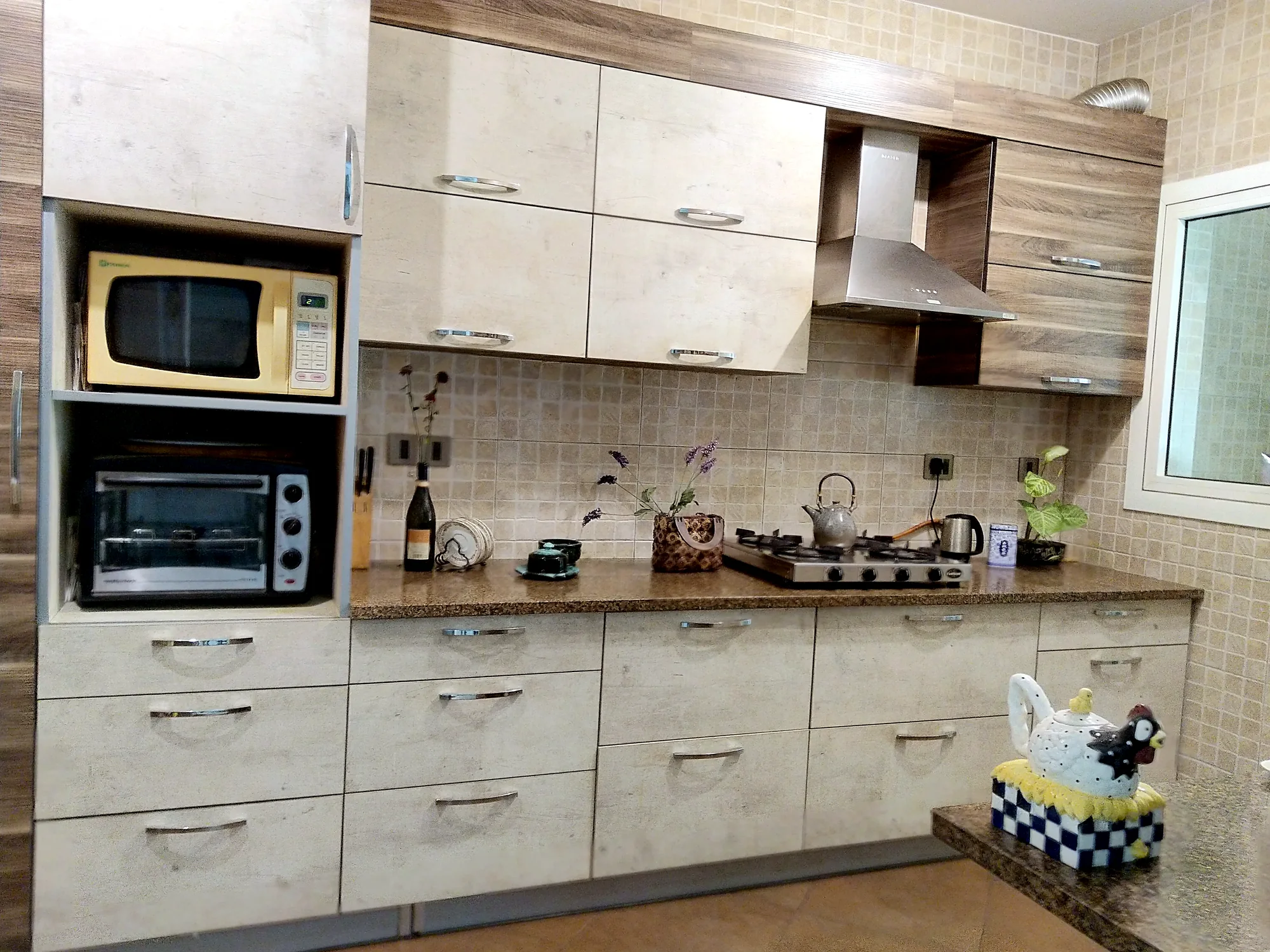
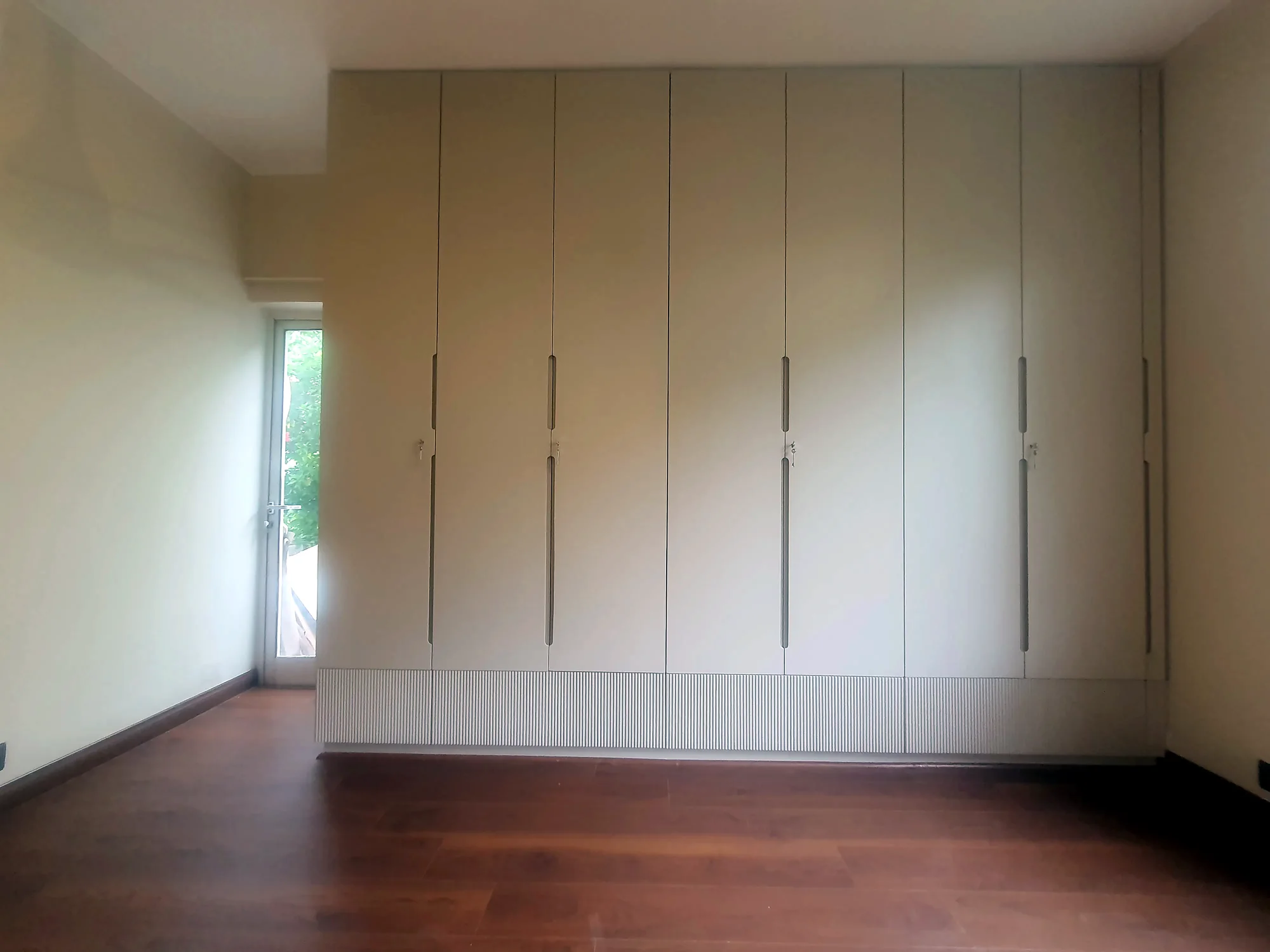
Most families decide in the first ten minutes after handover. Usually by looking at the shutters.
Short answer
Keep the carcass if the board is sound, square and dry. Modify the inside — that's where most supplied storage fails. Replace only what fails the board, hardware or layout test. In most handovers, redesigning the internals recovers more storage than replacing the whole unit.
The shutters are the least important part.
A wardrobe with tired shutters and a sound carcass can be saved. A wardrobe with beautiful shutters and shelves sized for nothing will frustrate you every morning for ten years.
The 15-minute inspection
The board
- Look at the exposed edges. Swelling or crumbling means moisture got in.
- Press near the screws. They should hold firm, not wobble in a widened hole.
- Check any unit on a wet wall — behind the sink, next to a bathroom.
Here's why the board underneath matters more than the finish on top.
The hardware
- Open every shutter. Does it sag, rub or bounce back?
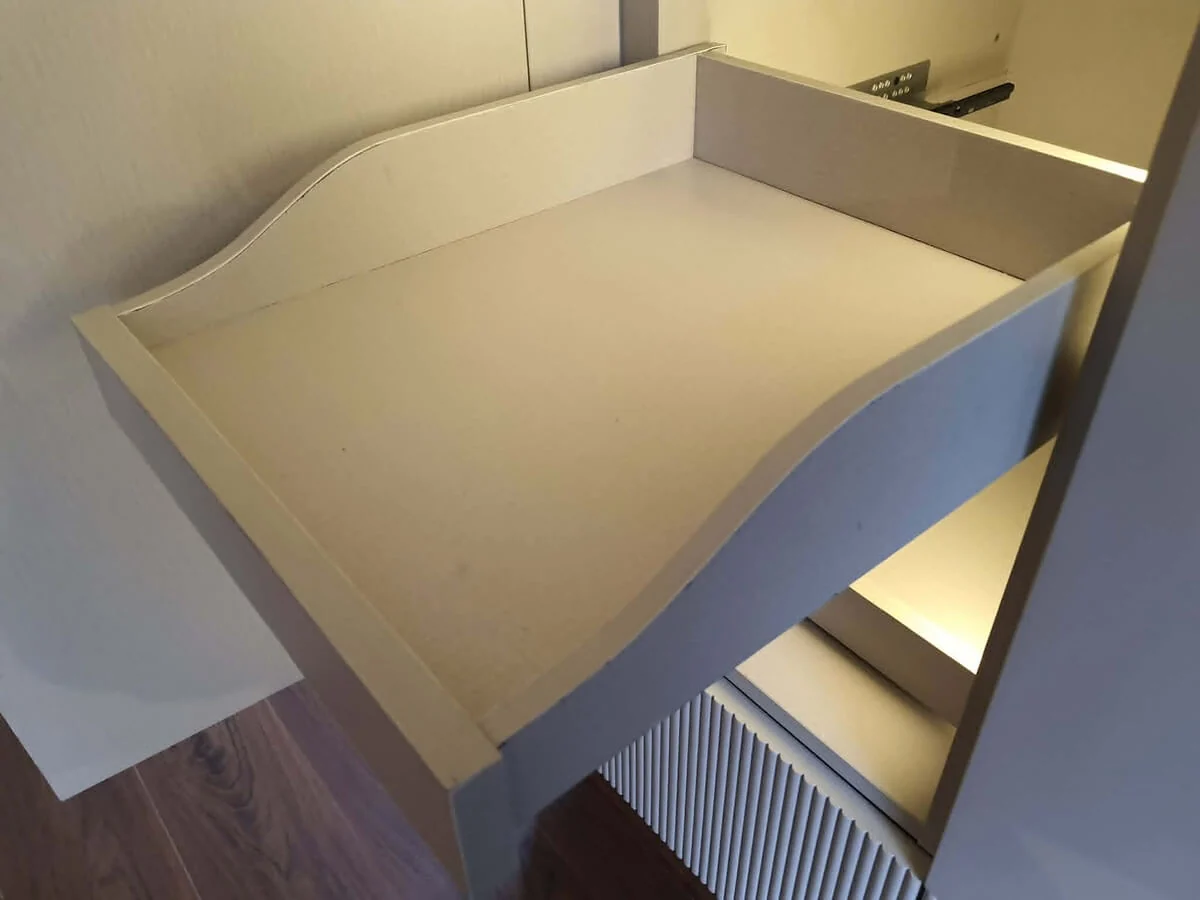
- Pull every drawer fully out. Does it come all the way, and close softly?
The layout
- How much is hanging, how much is shelving — and does that match what you own?
- Is there a loft nobody can reach without a ladder?
- In the kitchen: where are the spices relative to the burner? Is there a larder at all?
Keep, modify or replace
- Keep — sound board, smooth hardware, a layout that fits your inventory. Rare, but it happens. Don't spend money you don't need to.
- Modify — sound carcass, wrong inside. The most common case. Redesign the internals: drawers instead of deep shelves, a pull-down rail for the top zone, a shoe pull-out, a jewellery drawer. New shutters and hardware if needed.
- Replace — swollen board, a carcass out of square, or a layout so wrong that modifying it costs nearly as much as starting over.
Modifying keeps your walls, tiles and plumbing untouched. That alone saves weeks.
Kitchens: the inside fails first
A supplied kitchen usually looks fine. Then you cook in it for a week.
- Shelves where drawers should be — you kneel to find the pressure cooker.
- No larder — bulk atta, rice and oil end up on the counter.
- Counter height set for nobody in particular — and your back notices by Thursday.
Most of this is fixed inside the existing carcass. Here's how kitchen storage for Indian cooking should be planned, and what a commissioned kitchen changes.
Wardrobes: count before you cut
Before anything is changed, count what you own. Long hanging, short hanging, folded, bags, shoes, luggage. A supplied wardrobe was drawn for an imaginary owner. You're the real one.
Most finished homes waste around 30% of their storage. In a supplied wardrobe, most of it is at the back of deep shelves and up in the loft. Design30 is how I design it back.
Read next
Frequently Asked Questions
Should I replace the builder-supplied kitchen and wardrobes?
How do I check if builder wardrobes are worth keeping?
Can new shutters be fitted on an old wardrobe carcass?
What usually fails first in a builder kitchen?
Is it cheaper to modify than to replace?
If you're standing in a new apartment wondering what to rip out — send me photos of the insides. Not the shutters. The insides.
Talk to Himani on WhatsApp